
Blog
Candida albicans: Introduction, Morphology, Pathogencity, Laboratory Diagnosis and Treatment
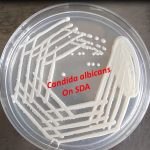 Introduction of Candida The yeast is a common commensal of the gastrointestinal tract. Most Candida species are opportunistically occurring in debilitated persons e.g. Diabetes patients, those who are taking anticancer therapy and immunocompromised patients, HIV patients, and so on. Classification of Candida Scientific classification Kingdom: Fungi Division: Ascomycota Class: Saccharomycetes Order: Saccharomycetales Family: Saccharomycetaceae Genus: Candida Species: C. albicans Other medically important Candida species are Candida albicans, Candida tropicalis, Candida parapsilosis, Candida glabrata and Candida krusei. Morphology...
MIU Test: Uses, Principle, Composition, Procedure, Result Interpretation and keynotes
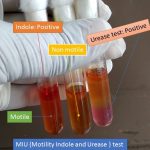 Use of MIU Test MIU stands for Motility Indole Urea. MIU test is useful for the identification of gram-negative bacilli especially bacteria of Enterobacteriaceae. Three tests in a single tube that helps to differentiate the organisms on the basis of motility, urease, and indole production. MIU Test Principle The test organisms in MIU agar after incubation show either diffused growth or turbidity extending away from the stab inoculation line in the case of motile organisms while non-motile...
SIM Test: Introduction, Principle, Procedure, Result Interpretation and Limitations
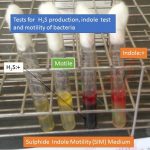 Introduction of SIM Test SIM (Sulfide, Indole, Motility ) medium is useful for the differentiation of gram-negative enteric bacilli. SIM test helps to isolate the organisms on the basis of sulfide production, indole formation, and motility. Principle of SIM Test The medium has the constituents ferrous ammonium sulfate and sodium thiosulfate, which together serve as indicators for the production of hydrogen sulfide (H2S). Hydrogen sulfide production detects when ferrous sulfide, a black precipitate, is produced as...