
Blog
Bacterial Toxins: Introduction and Differences between Exotoxins and Endotoxins
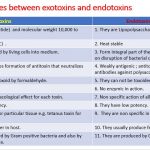 Exotoxins and endotoxins of bacterial toxins Bacterial toxins are of two types and they are - Exotoxins and Endotoxins. 1. Exotoxins Exotoxins of bacteria toxins are heat-labile proteins that are secreted by certain species of bacteria. They diffuse readily into the surrounding medium. They are highly potent even in small amounts and constitute some of the most poisonous substances known. Botulinum toxin is the most poisonous, it has been estimated that 3 kg of botulinum toxin...
Oxidative Fermentative (OF) Test: Introduction, Principle, Procedure ,Results Interpretation and Limitations
 Introduction of Oxidative Fermentative Test OF stands for Oxidative Fermentative test. The OF basal media was developed by Hugh and Leifson in 1953. OF Basal Medium is recommended for the detection of oxidation or fermentation of carbohydrates by bacteria. This basal medium is useful to aid in the identification of gram-negative bacteria on the basis of their ability to oxidize or ferment a specific carbohydrate. As compared to other OF Media, Hugh and Leifson's formula employs a...
Staphylococcus aureus: Introduction, Pathogenecity, Lab Diagnosis and Treatment
 Introduction of Staphylococcus aureus Scientific classification of Staphylococcus aureus is given as: Domain: Bacteria Phylum: Firmicutes Class: Bacilli Order: Bacillales Family: Staphylococceae Genus: Staphylococcus Species: aureus Staphyle means bunch and kokkos mean berry. It was isolated by Pasteur (1880) from a pus sample. The pathogenic role of Staphylococcus was described by Sir Alexander Ogston and who was a surgeon from Scotland. Other than Staphylococcus cluster forming cocci are- Micrococcus Gafkey Sarcina Peptococcus Aerococcus Staphylococcus aureus Definition...