
Blog
Dorset Egg Medium: Introduction, Principle, Composition, Preparation, Procedure, Colony Morphology, Uses and Keynotes
 Introduction of Dorset Egg Medium In 1903, Dorset inaugurated the first egg-based medium, and later it was further modified by Löwenstein-Jensen and Ogawa using whole eggs as nutrients and malachite green to inhibit the growth of contaminants. Dorset Egg Medium is used for culturing mycobacteria and it is a non-selective medium well suited for the maintenance of pure cultures of Mycobacterium. The medium is also used for the maintenance and transport of Neisseria meningitidis and Haemophilus influenzae type b. Principle...
Human Microbiome: Agar Art
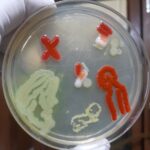 Human Microbiome ‘Human Microbiome’ is an abstracted artwork of the human age-wise microbial load and its impact on our life. Research data reflects that we come on the earth with microbes and die with microbes. They have coevolved with us and reside in our body to develop a host-associated structure, called “Microbiome or Microbiota or Commensal microflora or normal microflora. Our body has a nearly equal number of bacteria and our body cells. The establishment of...
Biopsy Tissue Categories: Introduction, Types
 Biopsy Tissue Categories The biopsy tissue is an examination of tissue removed from a living body to find out the presence, cause, or extent of disease and it is categorized into the following types on the basis of size- Small Biopsy Lipoma Intermediate Large Extra-large and Radical Types of Biopsy Small 1. Cervical biopsy 2. Endometrial tissue biopsy 3. bronchoscopic biopsy 4. Laryngoscopic biopsy 5. Colonoscopic biopsy 6. Endoscopic biopsy 7. Cystoscopic biopsy 8. Pleural biopsy...