
Blog
Urine Examination: Introduction, Sample Collection, Macroscopic Examination, Chemical Examination and Microscopic Examination
 Introduction of Urine Examination Urine is a simple type of specimen and it is the most common test specimen in the clinical laboratory. It is a liquid waste produced by our kidneys, a clear, transparent fluid that normally has an amber colour. Urine examination completes into various phases i.e. physical examination, chemical examination and microscopic examination. Physical examination of urine says about colour, odour, clarity, volume, and specific gravity while chemical examination of urine includes the...
Faecal Occult Blood Test: Introduction, Principle, Procedure, Result Interpretation and Keynotes
 Introduction of Faecal Occult Blood Test Faecal Occult Blood Test is the common routine test in the clinical laboratory to find out the hidden blood passing in the faeces. Bleeding into the intestine may cause the passage of blood in the stool. When the bleeding is chronic with only small amounts of blood being passed with faces, the blood is not seen in the stool and is referred to as occult or hidden blood. The commonest causes of...
Trichomonas vaginails saline smear: Introduction, Principle, Test Requirements, Test Procedure, Result and Interpretation and Keynotes
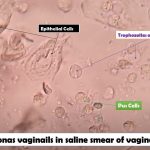 Introduction of Trichomonas vaginails saline smear Trichomonas vaginails saline smear is useful to identify the causative agent of venereal disease, trichomoniasis. Trichomoniasis is a sexually transmitted infection. A protozoan parasite, Trichomonas vaginalis is a causative agent of this infection that is very common. and easily treatable. T. vaginalis travels from person to person through genital contact during sex. In women, the organism causes an infection in the vagina, urethra, or both. In men, the infection only happens in the urethra. Once...