
Blog
Mueller Hinton Agar (MHA): Introduction, Composition, Preparation and Its Applications
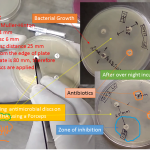 History and Introduction of Mueller Hinton Agar The name Mueller Hinton agar(MHA) is from the surname of co-developers microbiologist John Howard Mueller and veterinary scientist Jane Hilton at Harvard University as a culture for gonococcus and meningococcus, who published the method in 1941. It is a non-selective and non-differential medium. In 1966, Bauer et al. adopted MHA for antimicrobial susceptibility testing. Later Muller Hinton agar (MHA) was adopted as the common medium to use for routine antibiotics...
E-Test (Epsilometer Test): Introduction, Principle, Procedure, Result and Interpretation
 Introduction of Epsilometer test (E-test) Epsilometer test is in brief E-test. It is an automated system for measuring the minimum inhibitory concentration (MIC) of the bacterial isolate. It is very simple to perform MIC of the bacterial isolate as compared to other techniques like broth and agar dilution methods which are technically cumbersome. An elliptical zone of growth inhibition is seen around the strip after incubation. The MIC is read from the scale at the intersection of...
Culture media: Introduction, Composition and Types
 Introduction of culture media Media –Plural While medium is singular Culture media are required to grow the organisms from infected material to identify the causative agent and its basic constituents are- Water: source of hydrogen and oxygen Electrolyte: Sodium chloride or other electrolytes Peptone: It is a complex mixture of partially digested protein. It contains proteoses, amino acids, polypeptides, phosphates, minerals (K, Mg) and accessory growth factors like nicotinic acid and riboflavin. Meat extract: Available commercially...