
Blog
Scedosporium: Introduction, disease causing, lab diagnosis and treatment
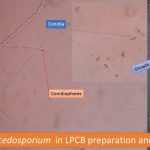 Scedosporium: Introduction, disease causing, lab diagnosis and treatment Introduction Scedosporium apiospermum is an emerging opportunistic filamentous fungus.It is notorious for its high levels of antifungal-resistance and fast growing. Colonies are greyish -white, suede-like to downy with a greyish-black reverse. Numerous single-celled, pale brown, broadly clavate to ovoid conidia, 4-9x 6-10 µm. Conidia arises singly or in small groups on elongate, simple or branched conidiophores or laterally on hyphae as shown above picture. Two species i.e. Scedosporium apiospermum and are of...
Nigrosin stain: Use, Composition, Test Procedure, Result and Interpretation
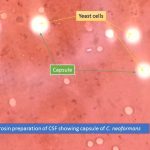 Use of nigrosin stain 10% w/v Nigrosin stain is a negative stain. It uses for observation of capsule. Capsule of organisms does not take stain and therefore clear halos surrounding the cells. It is clear as shown above picture. It uses for observation of various microorganisms capsules like Cryptococcus neoformans, Klebsiella pneumonie, Streptococcus pneumoniae, etc. Composition Following are the ingredients of nigrosin stain. Nigrosin : 10.0 gm Formalin: 0.5 ml Distilled water: 100.0 ml Test Requirements...
Hospital acquired infection: Introduction, common pathogens, types of infections, transmission, prevention and treatment
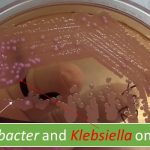 Hospital acquired infection: Introduction, common pathogens, types of infections, transmission, prevention and treatment Introduction of Hospital acquired infection Hospital acquired infection (HAI) or nosocomial infecion and health care- associated infection (HCAI) are the synonyms of each other. It is an infection that acquires in a hospital or other health care facility like nursing home, rehabilitation centre OPD clinic or other clinic setting.It spreads to the susceptible patient in the clinical setting by various methods.By the health care staff , contaminated equipment,...