
Blog
Water Microbiology : Introduction, Bacterial Flora, Sampling, Method of Analysis, Result Interpretation and Treatment of Water
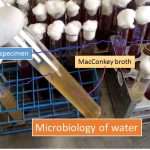 Introduction of Water Microbiology Drinking water is acceptable and fit for drinking when it is clear, colorless, odorless and without disagreeable taste. It should microscopically be free from pathogenic organisms and thus water microbiology is useful. Bacterial flora in the aquatic environment Largely saprophytic organisms, some of which belong to the genera Micrococcus, Pseudomonas, Serratia, Flavobacterium, Chromobacterium, Acinetobacter, Alcaligenes, etc. Biofilm development in streams, water pipe networks and industrial processes. Some opportunistic pathogens such as Legionella, may be...
Culture media: Introduction, Composition, Types and Their Uses
 Introduction of culture media Media is plural while medium singular. Culture media require to grow the organisms from infected material to identify the causative agent. They are of different types on the basis using purposes. Nutrient agar(NA) uses for cultivation non-fastidious bacteria like Escherichia coli, Klebsiella pneumoniae, Pseudomonas aeruginosa where as 5% sheep blood agar (BAP) needs for Streptococcus species, Neisseria species. Chocolate agar(CHOC) is useful for culture of Haemophilus influenzae. MacConkey agar (MAC) is a selective, differential and...
Normal flora: Definition, Types, its presence in our body sites, beneficial and harmful effects
 Normal flora: Definition, Types, its presence in our body sites, beneficial and harmful effects Normal Flora In the normal, healthy person the gut flora is a balanced community of different organisms(Cambridge English Dictionary). Normal flora refers to the population of microorganisms that inhabit skin and mucous membranes of normal body. A healthy fetus in-utero is free from microorganisms. During birth the infant exposes to vaginal flora. Within few hours of birth, oral and nasopharyngeal flora develops...