
Blog
Hucker’s Modification Gram stain: Composition, Preparation and Procedure
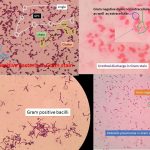 Introduction of Hucker Modification Gram stain The Hucker modification Gram stain test was originally developed by Christian Gram in 1884. The modification currently used for general bacteriology was developed by Hucker in 1921. Gram-stain can be used effectively to divide all bacterial species into two large groups: those that take up the basic dye, crystal violet (Gram-positive), and those that allow the crystal dye to wash out easily with the Decolorizer alcohol or acetone (Gram-negative) Hucker Modification Gram...
Triple Sugar Iron (TSI) Agar Test :Composition, Principle, Procedure, Result and Interpretation
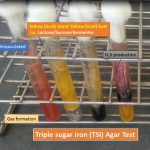 Triple Sugar Iron Agar Test Triple Sugar Iron Agar test is a combo test and useful for identification of mainly gram-negative bacteria, on the basis of following tests- fermenter or oxidizer or non-utilizer of carbohydrates like glucose, lactose, or sucrose production of hydrogen sulfide (H2S) formation of gas Composition of Triple Sugar Iron Agar Triple Sugar Iron Agar (TSI) (Oxoid, England) Ingredients gm/liter Lab-lemco powder 3.0 Yeast...
Optochin Susceptibility Test :Principle, Procedure, Result and Interpretation
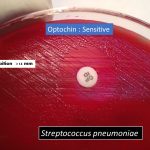 Optochin Susceptibility Test Optochin Susceptibility test uses for presumptive identification of Streptococcus pneumoniae from viridans streptococci. Principle of Optochin Susceptibility Test Ethylhydrocupreine hydrochloride (Optochin), a quinine derivative, selectively inhibits the growth of S. pneumoniae at a very low concentration (5ug/ml). Optochin may also inhibit other viridians streptococci, but only at much higher concentrations. The test has a sensitivity of more than 95%. Optochin is water-soluble and diffuses readily into an agar medium. Therefore, filter paper impregnated with...