
Blog
MGP Test: Introduction, Principle, Procedure, Result and Interpretation
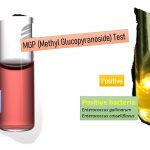 Introduction of MGP Test MGP stands for methyl-α-D-glucopyranoside. MGP test is effective for species identification of Enterococcus. Enterococcus gallinarum and Enterococcus casseliflavus are MGP test positive while Enterococcus faecalis and Enterococcus faecium are negative. Vancomycin-resistant Enterococcus faecium (VREF) is a serious nosocomial problem that is difficult to differentiate from Enterococcus gallinarum and Enterococcus casseliflavus, while not important for purposes of control of nosocomial infections, show intrinsic resistance to vancomycin due to the vanC gene. Another side, E....
Esculin hydrolysis (ESC) Test : Introduction, Principle, Procedure, Result Interpretation
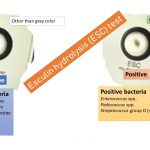 Introduction of Esculin hydrolysis Test The Esculin hydrolysis test is useful for those organisms which are able to hydrolyze the substrate, esculin by the enzyme, esculinase release by them. The list of positive and negative bacteria are as follows: Positive bacteria Enterococcus spp. Pediococcus spp. Streptococcus group D (non-Enterococci) Negative bacteria Gemella haemolysans Gemella morbillorum Streptococcus agalactiae (group B) Variable result Aerococcus viridans Aerococcus urinae V(+) = Variable reactions where the majority of isolates are positive (>80%) Leuconostoc spp. V(-) =...
LAP Test: Introduction, Principle, Procedure and Result Interpretation
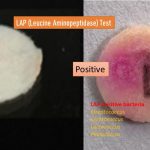 Introduction of LAP Test LAP stands for leucine aminopeptidase which is an enzyme useful for definitive identification of catalase-negative, gram-positive cocci of Aerococcus and Leuconostoc (LAP test negative) from other organisms in the group like Streptococcus, Enterococcus, Lactococcus, and Pediococcus (almost always positive). Principle of LAP test Hydrolysis of the leucine-pnaphthylamide substrate by the enzyme LAP on a paper disk inoculated with the bacteria like Streptococcus, Enterococcus, Lactococcus, and Pediococcus releases leucine and free b-naphthylamide. The bnaphthylamide...