
Blog
Malonate Test: Principle, Procedure, Uses, Result and Interpretation
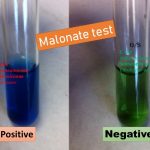 Introduction of Malonate Test Malonate test uses to check the ability of the organism to utilize malonate as the sole source of carbon for energy. To differentiate bacteria on the basis of a malonate utilization test. It is a colorful test to check the ability of organisms for using as the sole source of carbon as malonate. The endpoint of which is the production of alkaline metabolites that create a color change. This test is recommended as part of differentiating among the Enterobacteriaceae, especially species of Klebsiella and Salmonella....
PYR Test: Uses, Principle, Procedure, Result Interpretation and Limitations
 Uses of PYR Test PYR stands for L-pyrrolidinyl-β-naphthylamide. This PYR test uses to identify the capability of organisms utilizing substrate, PYR by L-pyrroglutamyl amino-peptidase. Application of this test are as follows: Identification of Streptococcus pyogenes (PYR positive)from other beta-hemolytic Streptococci (Negative) Differentiation of Enterococcus species (PYR positive) from group D Streptococci (Streptococcus bovis, Streptococcus equinus) which are PYR negative. It is used in the identification of Escherichia coli (PYR Negative), separating it from other indoles positive, lactose positive, gram-negative rods. It...
MUG Test: Introduction, Principle, Procedure and Result Interpretation
 Introduction of MUG Test MUG stands for 4-Methylumbelliferyl-β-D Glucuronide and it acts as a substrate for the organisms those having the enzyme β-glucuronidase. This enzyme is present in 97% of strains of E. coli. Organisms other than E. coli of the Enterobacteriaceae family Salmonella, Shigella, and Yersinia also possess the enzyme β-glucuronidase. This test uses for rapid identification of E. coli, the most common gram-negative rod seen in clinical specimens. Since verotoxin-producing E. coli strains are among the few...