
Blog
Motility Tests: Principle, Procedure and Result Interpretation
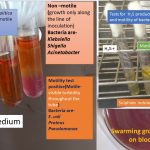 Principle of Motility Tests Organisms are motile due to flagella and motility tests used to detect the presence of flagella by bacteria, allowing them to travel in and out of the microscopic field or beyond their initial inoculation in agar. For the wet preparation, a drop of the organism in broth is suspended on a clean and grease-free glass slide, a coverslip is added, and the culture is observed microscopically for motility. Occasionally the organism is...
O/129 Disk Susceptibility Testing: Principle, Procedure,Result and Interpretations
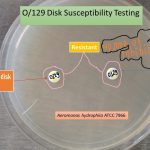 Introduction of O/129 Disk Susceptibility Testing O/129 Disk Susceptibility Testing is useful for the identification of Vibrio and Aeromonas species. Principle of O/129 Disk Susceptibility Testing O/129 disk is the vibriostatic agent 2,4-diamino-6,7-diisopropylpteridine phosphate. O/129 disks containing 10 and 150 µg are used in a method resembling disk susceptibility testing to differentiate Vibrio species from Aeromonas species. Aeromonas species are resistant, with no zone of inhibition at 24 hours, with both disks. Vibrio and Plesiomonas species will show...
Indoxyl Acetate Disk Test: Principle, Procedure and Result Interpretation
 Introduction of Indoxyl Acetate Disk test Indoxyl is a tryptophan product of putrefactive decomposition in the intestines of humans by a bacterial esterase. This Indoxyl Acetate Disk test uses to distinguish Campylobacter species. Positive tests are Campylobacter jejuni and Campylobacter coli where as Campylobacter lari and Campylobacter fetus negative. Principle of Indoxyl Acetate Disk test The presence of esterase enzyme present in organisms can be confirmed in vitro by the bacterial hydrolysis of indoxyl acetate to release indoxyl....