
Blog
Vibrio: Introduction, Morphology, Culture Characteristics, Pathogenesis, Lab Diagnosis and Treatment
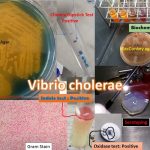 Introduction of Vibrio Vibrios are Gram-negative, rigid, curved rods or comma-shaped and they are highly motile-single polar flagellum, non-sporulated, and non-capsulated. They are present in marine environments and surface water with a cosmopolitan distribution. The most medically important member of the genus is Vibrio cholerae. Filippo Pacini isolated micro-organisms he called "vibrions" from cholera patients in 1854, because of their motility. Robert Koch Isolated V. cholerae 1883. It was first isolated by Koch (1883) from cholera patients in Egypt. Vibrio...
Agar Art with Living Microbes: Introduction, Requirements, Making Procedure and Uses
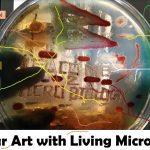 Introduction of Agar Art with Living Microbes Agar art or microbial art or germ art is the same thing in which artwork is created by culturing microorganisms in certain patterns. The microbes used can be bacteria, yeast fungi, or protists (less commonly). The microbes can be chosen for their natural colors. Organisms most commonly used and available are Staphylococcus aureus, Pseudomonas aeruginosa , Serratia marcescens as shown above picture. Painting with bacteria isn’t entirely new because Sir Alexander Fleming, the scientist responsible...
Microbiology Short Notes for MCQs: Medical Lab Technician, Technologist and such Related Fields
 Microbiology Short Notes The topic ' Microbiology Short Notes' will serve as a capsule for candidates who are participating posts for medical lab technicians, medical lab technologist,s and such related fields. Father of microbiology →Antony van Leeuwenhoek Father of modern microbiology → Louis Pasteur Father of medical microbiology → Robert Koch Father of modern bacteriology→ Robert Koch Father of medicine → Hippocrates Father of virology →Ivanowsky Father of Antiseptic surgery → Joseph Lister Father of blood group → Karl Landsteiner Milestones in microbiology Antony van Leeuwenhoek...