
Blog
Electron Microscope: Introduction, Types, Differences and Its Applications
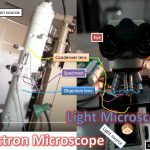 Introduction of Electron Microscope The organelles of the cell became known after the electron microscope was invented. It was developed in 1931 by Max Knoll and Ernst Ruska in Germany. It consists of a source of supplying, a beam of electron of uniform velocity, a condenser lens for concentrating the electron on the specimen, a specimen stage for displacing the specimen which transmits the electron beam, an objective lens, a projector lens, and a fluorescent screen...
Virology Short Notes for MCQs: Medical Lab Technician, Technologist and such Related Fields
Virology Short Notes The topic ‘ Virology Short Notes for MCQs’ will serve as a capsule for candidates who are participating in posts for medical lab technician, medical lab technologist, and such related fields. General Characteristics of Virus Viruses are obligate intracellular parasites. Viruses lack the metabolite machinery of their own to generate energy or synthesize proteins. Size 20-400 nm ( largest - poxvirus, smallest - picornavirus) Morphology of Virus Nucleic acid core surrounded by a protein coat...
Read MoreMycology Short Notes for MCQs: Medical Lab Technician, Technologist and such Related Fields
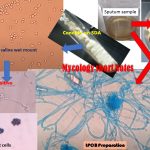 Mycology Short Notes The topic ‘ Mycology Short Notes for MCQs’ will serve as a capsule for candidates who are participating in posts for medical lab technician, medical lab technologist, and such related fields. Fungal infection Superficial infection Cutaneous infection Subcutaneous infection Systemic infection Opportunistic infection Superficial infection: by Malassezia furfur Cutaneous infection: by Dermatophytes Causative agents of ringworm and tinea Not involve living tissue Culture media: Sabrouand's Dextrose Agar (SDA) Classification depending upon site and colony characters ⇒Clinically...