
Blog
Novobiocin Susceptibility Test: Introduction, Principle, Procedure, Result Interpretation and Uses
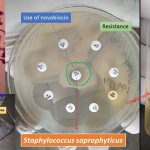 Introduction of Novobiocin Susceptibility Test In Novobiocin Susceptibility Test, the novobiocin ( antibiotic) differentiation disk is useful for presumptively distinguishing Staphylococcus saprophyticus from other coagulase-negative staphylococci (CoNS) in clinical ( urinary) specimens as shown above picture. Novobiocin is produced by the actinomycete Streptomyces nivens. Earlier it was considered a skin contaminant and only significant in immuno-compromised patients but today, Staphylococcus saprophyticus has proven to be an important uropathogen. It is second only to E. coli as the most common cause of cystitis...
Viral Specimens: Collection, Transportation and Preservation for Laboratory Diagnosis of Viruses
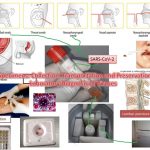 Viral Specimens collection Viral Specimens or samples collection plays a vital role in laboratory diagnosis. Proper sample collection leads to the proper diagnosis of disease. Sample should be collected aseptically. Appropriate samples from the appropriate site and an adequate amount should be collected. Once collected samples are recommended to emulsify or mixed properly with viral transport medium (VTM). Collection and Transport of Virological Specimens In the investigation of viral infections, reliable laboratory results can only be obtained...
Microscope, Simple and Compound: Introduction, Principle, Parts, Terminology, Size of Microorganisms, Care and Maintenance
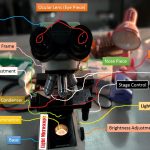 Introduction of Microscope The microscope is the instrument, the most characteristic of the microbiology laboratories. The magnification, it provides, enables us to see microorganisms and their structures otherwise invisible to the naked eye. The magnitudes attainable by microscopes range from 100 X-10,000,000X. It may be defined as an optical instrument, consisting of a lens or a combination of lenses, for making enlarged or magnified images of minute objects. (Micro: Small; scope: to view) Antony Von Leuwenhoek...