
Blog
Fungi: General Characteristics, Classification, Morphology, Pathogenecity, Sample collection, Lab Diagnosis, Treatment and Prevention
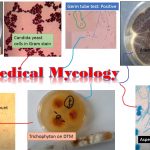 Fungi Fungi: All medical fungi under a single roof containing outlines general characteristics, classification, morphology, pathogenicity, sample collection, laboratory diagnosis, treatment, and Prevention. Fungus: Singular Fungi: Plural Course Objectives This course will enable us to become familiar with medically important fungi and to diagnose the infections caused by fungi. Course Contents 1. Introduction to Mycology Introduction, Classification of medically important fungi, Fungal species associated with AIDS. 2. Medically Important Fungi General characteristics of medically important fungi...
Rickettsia: Introduction, Morphology, Pathogenesis, Complications, Laboratory Diagnosis, Treatment and Prevention
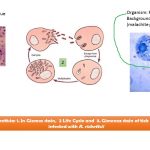 Introduction of Rickettsia Howard Taylor Ricketts (1909): Isolated Rickettsia from a patient suffering from Rocky Mountain spotted fever, late on he died while working with this organism. Obligate intracellular parasite and Gram-negative pleomorphic rods are poorly stained with Gram stain but properly stained with Giemsa or Gimenez stains. Normal habitat Parasite of arthropods e.g. fleas, lice, ticks, mites Scientific classification of Rickettsia Domain: Bacteria Phylum: Proteobacteria Class: Alphaproteobacteria Order: Rickettsiales Family: Rickettsiaceae Genus: Rickettsia Species group: Spotted fever...
Histoplasma : Introduction, Morphology,Life Cycle, Pathogenesis, Laboratory Diagnosis, Treatment and Prevention
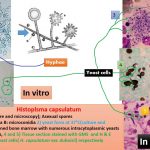 Introduction of Histoplasma capsulatum Histoplasma capsulatum was discovered by Pathologist, Samuel Taylor Darling in 1906. It is a causative agent of histoplasmosis ( systemic disease) sometimes called Darling’s disease, in honor of the discoverer. It is a dimorphic fungus and thus it grows as filamentous molds as saprobes and in the culture at 25°C; while in humans or culture at 37 °C, it transforms to a unicellular morphology ( yeast cells). Taxonomic classification (Darling, 1906) Kingdom:...