
Blog
Antigen: Definition, Types, Factor Affecting Antigenicity, Adjuvant, Epitope, Superantigen and Tests for Antigen Detection
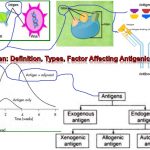 Introduction of Antigen In 1899 Ladislas Deutsch (Detre) (1874–1939) named the hypothetical substances halfway between bacterial constituents and antibodies "substances immunogens or antigens". He originally believed those substances to be precursors of antibodies, just like zymogen is a precursor of zymase. But by 1903 he understood that an antigen induces the production of immune bodies (antibodies) and wrote that the word antigen was a contraction of "Antisomatogen. Definition of antigen The antigen is a substance which...
Vaccine: Introduction, Mechanism, Types, Route of Administration
 Introduction of Vaccine The vaccine is a substance that is introduced into the body to prevent the disease produced by certain pathogens. The vaccine consists of dead pathogens or subunits (purified protein subunits, polysaccharides) or live but attenuated (artificially weakened) organisms. The vaccine induces immunity against the pathogen, either by the production of antibodies or by activation of T lymphocytes. Edward Jenner produced the first live vaccine. He produced the vaccine for smallpox from the cowpox...
Immunology Short Notes: Introduction and Related Topics
 Immunology Short Notes 'Immunology Short Notes' makes it easier to understand subject immunology as well as to secure good marks in the examination for multiple-choice questions (MCQs). Types of Immunity 1. Innate/ natural / native 2. Acquired / adaptive / specific Innate immunity: Innate immunity is resistance to infection which is present by birth. (a) Species immunity: e.g. Birds are resistant to tetanus. Chicken is resistant to Anthrax (b) Racial immunity: e.g. Algerian sheep immune to Anthrax...