
Blog
Herpes Simplex Virus: Introduction, Properties, Pathogenecity, Lab Diagnosis , Treatment and Prevention
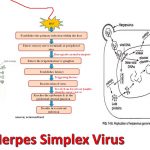 Herpes Simplex Virus (HSV) Introduction Human infections with the Herpes simplex virus (HSV) were first documented in ancient Greece. Greek scholars, in particular, Hippocrates used the word "herpes',' meaning creeping or crawling, to describe spreading lesions. The classification that is now in use came into being at the end of the eighteenth century, and even though it did. Previously, the vesicular nature of the lesions associated with herpes infections was well characterized, and it was not...
Rabies Virus: Introduction, Morphology, Pathogenecity, Lab Diagnosis, Treatment and Prevention
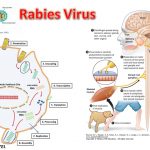 Rabies Virus Introduction Rabies virus is the causative agent of Rabies. Family: Rhabdoviridae Genus: Lyssavirus Lyssa = rag or madness ( symbol of Rabies) Rabies: It is an acute infection of the central nervous system (CNS) caused by the rabies virus that is almost always fatal. The virus is transmitted to humans through the bite of rabid animals. Morphology of Rabies virus Bullet-shaped 76× 175 nm Helical symmetry nucleocapsid surrounds the spiral-shaped core of nucleic acid...
Bordetella: Introduction, Morphology, Pathogenecity, Lab Diagnosis,Treatment and Prevention
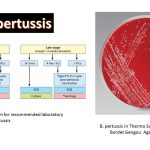 Introduction of Bordetella Bordetella was described by Bordet and Gengou (1900) in a sputum sample of children with whooping cough. B. pertussis is the causative agent of pertussis or whooping cough. In 1906 -B. pertussis ( Whooping cough) 1911 - B. bronchoseptica from dog 1937 - B. parapertussis ( mild whooping cough) Morphology of Bordetella Bordetella pertussis: Gram- ve coccobacilli, 1-1.5 × 0.5 μm, may occur singly or in the chain and may show bipolar staining, non - motile,...