
Blog
Mycobacterium leprae: Introduction, Morphology, Pathogenicity, Lab Diagnosis, Treatment and Prevention
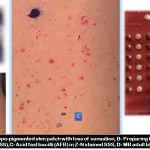 Introduction of Mycobacterium leprae Mycobacterium leprae is the causative agent of a chronic infectious disease called Leprosy. Gerhard Armauer Hansen (1841-1912), who first discovered M. leprae in 1873, and leprosy is also known as "Hansen’s disease". This bacterium has not been cultured so far in vitro even being the first bacterium to be identified as causing disease in humans. It belongs to the family Mycobatcteriaceae. Classification of Mycobacterium leprae Domain: Bacteria Phylum: Actinobacteria Class: Actinobacteria Order: Actinomycetales...
Slit Skin Smear (SSS): Introduction, Preparation, Staining, Result Interpretation, Application and Keynotes
 Slit Skin Smear (SSS) Introduction Slit Skin Smear (SSS) is a very useful technique to see the presence of the causative organism, Mycobacterium leprae, in the skin smear of a patient’s body since slit skin smear (SSS) is a gold standard technique for the leprosy diagnosis. The causative agent of leprosy, also called Hansen' disease is M. leprae and three cardinal signs of leprosy are as follows- Hypo or hyperpigmented anaesthetic patch Peripheral nerve involvement Positive...
Cryptococcal Antigen Test: Introduction, Principle, Test Procedure, Result Interpretation and Clinical Significance
 Introduction of Cryptococcal Antigen Test Cryptococcal antigen test is a very effective test since it can detect the infection early before it develops into life-threatening cryptococcal meningitis (Cryptococcosis). Fungal infection, Cryptococcosis is caused by the encapsulated yeast Cryptococcus neoformans (serotypes A and D), C. neoformans var. grubii (serotype A) has a worldwide distribution. Individuals with impaired cell-mediated immune (CMI) function due to acquired immunodeficiency syndrome (AIDS), lymphoproliferative disorders, steroid therapy, and organ transplantation is at increased...