
Blog
Lowenstein Jensen Medium: Introduction, Composition, Preparation, Procedure, Result Interpretation and Keynotes
 Introduction of Lowenstein Jensen Medium Lowenstein Jensen Medium is named after the surnames of Austrian pathologist Ernst Lowenstein (1878–1950) and the Danish chemist Kai Arne Jensen (1908–1992). The causative agent of tuberculosis is Mycobacterium tuberculosis. M. tuberculosis requires aerobic conditions and a protein-enriched medium for culture. The brief name of Lowenstein–Jensen medium is LJ medium. LJ medium slopes are the main solid media used to culture Mycobacterium species( especially Mycobacterium tuberculosis) that contains inspissated eggs, malachite green, and...
Oxidation Fermentation, Hydrogen Sulfide, Gas Formation Test: Introduction, Agar Composition, Principle, Procedure, Result and Interpretation
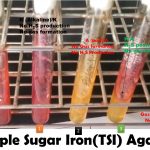 Introduction of Oxidation fermentation, Hydrogen Sulfide, Gas Formation Test Oxidation fermentation, Hydrogen Sulfide, Gas Formation Test is performed in a single TSI agar and it is useful for the following features- To know the carbohydrate utilization ability (oxidation fermentation) of the organisms Gas formation by the organisms Hydrogen sulfide production by the bacteria TSI stands for triple sugar iron and it is an agar medium recommended for use in the differentiation of Enterobacteriaceae by their ability...
Motility: Introduction, Types, Detection Methods and Keynotes
 Introduction of Motility Flagellar motility is due to rotation due to in the anti-clock direction for changing of direction, the agar tumbles in a clockwise direction then again starts motility in an anticlockwise direction. Types Darting/shooting: motility: It is a rapid type of movement e.g. Vibro cholerae and it may move as fast a 200µm per second. Active motility- e.g. Enterobacteriaceae ( Except Klebsiella and Shigella) Stately or sluggish movement- Bacillus, Clostridium (oscillatory i.e. pendulum-like movement)...