
Blog
Aspergillus flavus: Introduction, Morphology, Pathogenicity, Lab Diagnosis, Treatment, Prevention, and Keynotes
 Introduction Aspergillus flavus is a filamentous fungus belonging to the Aspergillus genus. It is widely distributed in the environment and can be found in soil, decaying vegetation, and various organic materials. This fungus is known for its significant economic and ecological impact, as well as its association with human health and agriculture. Morphology: Aspergillus flavus has a characteristic appearance, forming colonies with a velvety texture and a greenish-yellow to yellowish-brown color. The colonies produce conidiophores, which...
A. fumigatus: Introduction, Morphology, Pathogenicity, Lab Diagnosis, Treatment, Prevention, and Keynotes
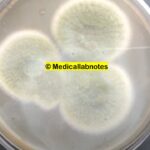 Introduction Aspergillus fumigatus is a filamentous fungus that belongs to the genus . It is one of the most common species of Aspergillus and is widely distributed in the environment. A. fumigatus is known for its ability to produce large quantities of airborne spores, which can be inhaled by humans and animals. A. fumigatus is an opportunistic pathogen, meaning that it primarily affects individuals with weakened immune systems or underlying respiratory conditions. It is a leading...
Enterococcus durans: Introduction, Morphology, Pathogenicity, Lab Diagnosis, Treatment, Prevention, and Keynotes
 Introduction Enterococcus durans is a species of Gram-positive bacteria that belongs to the Enterococcus genus. It is commonly found in various environmental sources, including soil, water, and food. It is also a part of the normal microbial flora of the gastrointestinal tract of humans and animals. Similar to other enterococci, Enterococcus durans is facultatively anaerobic, meaning it can grow both in the presence and absence of oxygen. It is catalase-negative and non-spore-forming. The bacterium appears as...