
Blog
Plasmid: Introduction, Structure, Types, Isolation and Its Uses
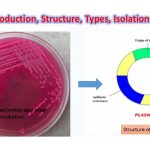 Introduction of plasmid A plasmid is an extrachromosomal DNA that is naturally present in some bacteria but also present in some eukaryotes e.g. Dictyostelium purpureum. It can replicate independently of the host chromosome. The plasmid is circular and double-stranded and carries few genes and their size ranges from 1 to over 200-kilo base pairs. Plasmid structure It contains three components: an origin of replication, a polylinker to clone the gene of interest (called multiple cloning site where...
Bacteria Identification from Given Sample Skills: Organism Isolation and Antimicrobial Sensitivity Testing
 Question for bacterial identification For bacteria identification of organisms, you can ask if you have any queries related to a given question. A broth culture is given to you to isolate and identify the organism and also produce its antibiotic sensitivity profile by Saturday. Please do not proceed to another experiment before showing the result of your experiment to your teacher. Time of inoculation - 1: 00 pm Type of broth - BHI Incubation – aerobically Temperature...
COVID-19 testing : Introduction, Types and Clinical Significance
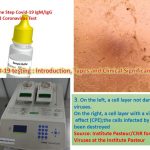 Introduction of COVID-19 Testing COVID-19 Testing is the most important tool for diagnosis of this coronavirus disease due to being similarities of various diseases. Coronavirus disease 2019 or COVID -19 is a viral disease and its causative agent is severe acute respiratory syndrome coronavirus 2 (SARS-CoV-2). It is a positive-sense single-stranded RNA virus. Antibodies ( IgM, IgG, and IgA) in blood and nucleocapsid protein (N protein) of the novel coronavirus and genes RdRP (RNA-dependent RNA polymerase ), E (envelope protein), N (nucleocapsid protein),...