
Blog
Saline Wet Mount for Stool: Introduction, Principle, Preparation, Result Interpretation, Limitations and Related Videos
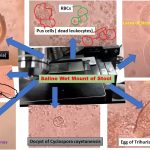 Saline Wet Mount for Stool Saline wet mount for stool or stool wet mount is the simplest and basic method for the study of feces and applicable in every medical laboratory even in small set up. It uses for the following purposes- To observe live trophozoites ( e.g. Entamoeba histolytica/dispar, Girdia lablia, Trichomonas, etc.) and larvae of parasites ( e.g. Strongyloides stercoralis) are motile except inactive forms. To find out eggs, cysts, oocysts of different parasites...
Dermatophyte Test Medium (DTM): Introduction, Principle, Composition, Test Procedure, Colony Characteristics and Uses
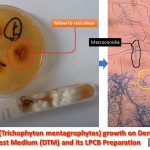 Introduction of Dermatophyte Test Medium (DTM) Dermatophyte Test Medium (DTM) is a selective and differential medium recommended for the cultivation and isolation of pathogenic dermatophytic fungi. The Dermatophytes are a distinct group of fungi that infect the hair, skin, and nails in humans producing a variety of cutaneous infections known as ringworm. Dermatophytes are a group of three genera like Trichophyton, Microsporum and Epidermatophyton are responsible for most of the cutaneous fungal infections. Principle of Dermatophyte Test...
Czapek Dox Agar : Introduction, Principle, Composition, Test Procedure, Colony Characteristics and Uses
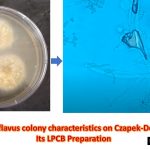 Introduction of Czapek Dox Agar Czapek medium is also called Czapek’s agar (CZA) from the surname of inventor Czech botanist Friedrich Johann Franz Czapek (1902-1903). Later CZA was modified by another American inventor, chemist Arthur Wayland Dox (1910) and thus its name became' Czapek-Dox medium' and formula prepared according to Thom and Church. It is recommended for use in qualitative procedures for the cultivation of saprophytic fungi and soil bacteria. The medium contains sucrose as the sole source...