
Blog
Centrifuge: Introduction, Principle, Types, Handling Procedure, Uses and Keynotes
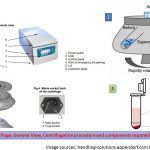 Introduction of Centrifuge Benjamin Robins (1707–1751), an English military engineer invented a whirling arm apparatus to determine drag. Later in 1864, Antonin Prandtl proposed the idea of a dairy centrifuge to separate cream from milk and his brother Alexander Prandtl became able to exhibit a working butter fat extraction machine in 1875. A centrifuge is a piece of equipment used to separate heavier particles from lighter ones by the action of centrifugal force. The first analytical...
Meningococcus: Introduction, Culture characteristics, Pathogenesis, Laboratory Diagnosis and Treatment
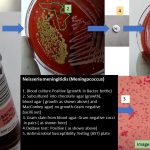 Introduction of Meningococcus Meningococcus is the common name of Neisseria meningitidis and causes meningitis (infections of the lining of the brain and spinal cord) and bloodstream infections (bacteremia or septicemia). The genus Neisseria is named after the German bacteriologist Albert Neisser, who discovered Neisseria gonorrhoeae, the pathogen that causes the human disease gonorrhea in 1879. Later, in 1887 Weichselbaun isolated meningococcus from the cerebrospinal fluid (CSF) of a patient. Meningococcus spreads through the exchange of respiratory and throat...
Xylose Lysine Deoxycholate (XLD) Agar : Introduction, Principle, Preparation, Test procedure, Colony characteristics and Limitations
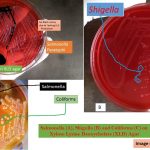 Introduction of Xylose Lysine Deoxycholate (XLD) Agar Xylose Lysine Deoxycholate (XLD) Agar is a selective, differential, and indicator medium for the isolation of enteric pathogens. It also supports the growth of more fastidious enteric organisms. XLD agar was developed by Taylor. It was specially designed to allow the growth of Shigella species and is a proven medium for the isolation of this organism. It has also been found to be an excellent medium for isolating Salmonella species as well. Salmonella...