
Blog
Iodine Wet Mount Preparation: Introduction, Principle, Procedure, Result Interpretation and Keynotes
 Introduction of Iodine Wet Mount Preparation D’Antoni’s Iodine stain is recommended for use in Iodine wet mount preparation for detection of protozoan cysts and helminth eggs and larvae of stool specimens. Principle of Iodine Wet Mount Preparation Iodine Wet Mount Preparation is a brown-colored preparation that stains the presence of pale refractile nuclei, yellowish cytoplasm, and brown glycogen material within the cyst. Helminth eggs and larvae are recognizable in wet mounts, though iodine staining occasionally masks the internal morphologic...
Actinomyces: Introduction, Classification, Morphology, Pathogenecity, Lab Diagnosis, Treatment and Keynotes
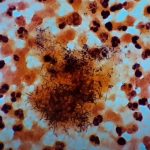 Introduction of Actinomyces The above picture is showing Actinomyces in a Gram-stained smear of pus in a patient with odontogenic cervicofacial actinomycosis. It is also called a Ray-like fungus. Wolff and Israel described this organism in 1891. Classification of Actinomyces Domain: Bacteria Phylum: Actinobacteria Class: Actinobacteria Order: Actinomycetales Family: Actinomycetaceae Genus: Actinomyces Species: A. israeli A. bovis A. eriksoni A. naeslundi B. odontolyticus A. viscisus The main species of medical importance is Actinomyces israeli. Morphology of Actinomyces They are Gram-positive, ...
Laboratory Animals: Introduction, Common Animals and Their Usage
 Introduction of Laboratory Animals The common laboratory animals are mice, monkeys, hamsters, guinea pigs, rats, rabbits, ferrets, fowls, and sheep. The animal experiment was started from the time of Aristotle (384–322 B.C.). The role of these animals to put science at this level is admirable. But we should not forget animal rights. This concern has led to laws and regulations governing the use of animals in research and to various guides and statements of principle designed to...