
Blog
Germ Tube Test: Introduction, Principle, Procedure, Result Interpretation and Keynotes
 Introduction of Germ Tube Test Germ Tube Test procedure is used for presumptive identification of Candida species. The culture of Candida species is treated with normal human pooled serum or sheep or rabbit or fetal calf serum and incubated at 37°C for 2-4 hours. A drop of suspension is examined on the slide under a microscope. The germ tubes are seen as long as tube-like projections extending from the yeast cells. There is no constriction at the point...
Endospore Stain: Introduction, Principle, Requirements, Procedure, Result Interpretation and Keynotes
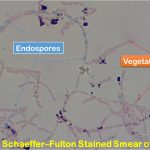 Introduction of Endospore Stain When conditions for vegetative growth are not favorable, especially when carbon and nitrogen become unavailable spore formation occurs Spore-forming species are represented in most classes, including the Bacilli, the Clostridia, the Erysipelotrichi are able to survive by forming resistant endospores. Spore formation involves a change in enzyme activity and morphology. The spore may be positioned at the end (terminal) of the bacterium or centrally (median). It may be round, oval, or elongate. Endospores...
Spore Stain: Introduction, Principle, Requirements, Procedure, Result Interpretation and Keynotes
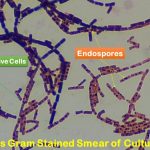 Introduction of Spore Stain When conditions for vegetative growth are not favorable, especially when carbon and nitrogen become unavailable spore formation occurs Spore-forming species are represented in most classes, including the Bacilli, the Clostridia, the Erysipelotrichi are able to survive by forming resistant endospores. Spore formation involves a change in enzyme activity and morphology. The spore may be positioned at the end (terminal) of the bacterium or centrally (median). It may be round, oval, or elongate. Endospores...