
Blog
4-Methylumbelliferyl-β-D Glucuronide Test: Introduction, Principle, Procedure and Result Interpretation
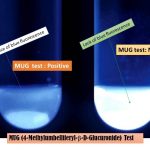 Introduction of 4-Methylumbelliferyl-β-D Glucuronide Test 4-Methylumbelliferyl-β-D Glucuronide test short form is MUG test and it acts as a substrate for the organisms those having the enzyme β-glucuronidase. This enzyme is present in 97% of strains of E. coli. Organisms other than E. coli of the Enterobacteriaceae family Salmonella, Shigella, and Yersinia also possess the enzyme β-glucuronidase. This test uses for rapid identification of E. coli, the most common gram-negative rod seen in clinical specimens. Since verotoxin-producing E. coli strains are among the few E. coli strains that...
Mantoux Test For Tuberculosis: Introduction, Procedure, Normal Range and Result Interpretation
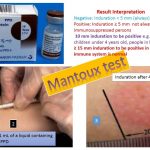 Introduction of Mantoux Test For Tuberculosis The standard recommended tuberculin test is the Mantoux test for tuberculosis. Tuberculin test or tuberculosis skin test or Mendel–Mantoux test or tuberculin sensitivity test or purified protein derivative (PPD) tests are synonyms to each other. It is a tool for screening for tuberculosis and for tuberculosis diagnosis. The Mantoux test determines if someone has developed an immune response to the bacterium that causes tuberculosis i.e. Mycobacterium tuberculosis. PPD uses in this test is the...
Diphasic Medium in Microbiology: Use, Composition and Advantage
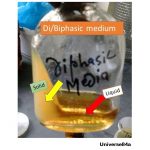 Use of Diphasic Medium Diphasic medium or biphasic medium is called so because of containing medium both solid and liquid phases in a single bottle. It uses mainly for minimizing contamination and spread of infections. It applies to cultures of highly infectious agents like Brucella and Mycobacterium. Isolation of Brucella It requires a selective medium: It contains bacitracin, nalidixic acid, cycloheximide, nystatin, polymyxin B, and vancomycin in a serum dextrose agar base. Bone marrow culture -criterion standard samples of any...