
Blog
Sabouraud Dextrose Agar (SDA): Introduction, Principle, Composition, Preparation, Colony Characteristics and Uses
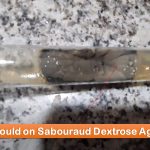 Introduction of Sabouraud Dextrose Agar (SDA) Sabouraud Dextrose Agar (SDA) is a common fungal culture medium and Sabouraud is the surname of creator Raymond Jacques Adrien Sabouraud a French physician born in Nantes. He formulated SDA in 1892 for culturing dermatophytes. SDA is the most common fungal medium to recover the growth of fungi in Mycology. It is different from bacterial medium due to having main two properties, comparatively low pH (5.6) and high concentration of sugar....
Potato Dextrose Agar: Introduction, Principle, Composition, Test Procedure, Colony Characteristics and Uses
 Introduction of Potato Dextrose Agar Potato Dextrose Agar (PDA) is a fungal medium and its ingredients are clear from its name which contains potato ( vegetable), dextrose ( sugar), and agar ( solidifying agent). PDA is recommended for the isolation and enumeration of fungi (yeasts and molds) from water, dairy, other food products, and even clinical specimens ( skin scrappings). The nutritionally rich base, potato infusion encourages mold sporulation and pigment production in some dermatophytes (e.g.Trichophyton rubrum). Principle...
Du Test in Blood Bank: Introduction, Principle, Procedure, Result Interpretation and Clinical Significance
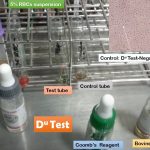 Introduction of Du Test in Blood Bank Du test helps to distinguish true Rho (D) negative from Du positive. Du is the weak expression of the RhD antigen (Du) and is widely used to describe cells that have a quantitative reduction in the expression of their RhD antigen. Principle of Du Test Red blood cells that react weakly or not at all in direct agglutination test with anti-D may react with anti-D on the presence of Coomb reagent...