
Blog
Staphylococcus: Introduction, Classification, Pathogenecity, Lab Diagnosis, Treatment and Keynotes
 Introduction of Staphylococcus aureus Staphyle means bunch and kokkos mean berry. Staphylococcus aureus was isolated by Pasteur (1880) from a pus sample. The pathogenic role of Staphylococcus was described by Sir Alexander Ogston and who was a surgeon from Scotland. Other than Staphylococcus cluster forming cocci are- Micrococcus Gafkey Sarcina Peptococcus Aerococcus Classification of Staphylococcus Scientific classification of Staphylococcus aureus is given as: Domain: Bacteria Phylum: Firmicutes Class: Bacilli Order: Bacillales Family: Staphylococceae Genus: Staphylococcus Species: S. aureus...
Serratia: Introduction, Classification, Pathogenecityl, Lab Diagnosis, Treatment, Prevention and Keynotes
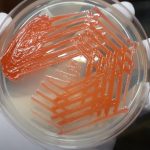 Introduction of Serratia Serratia is a genus of Gram-negative, facultatively anaerobic, rod-shaped lacking spores and capsules bacteria of the family, Enterobacteriaceae. This is a Gram-negative rod/ bacilli that thrive in moist environments. It frequently contaminates solutions and hospital equipment and the human reservoirs are the urinary and respiratory tracts as well as the gastrointestinal tract of children. The genus is named after SerafinoSerrati, an Italian physicist. In 1819, Bartolomeo Bizio, a pharmacist from Padua, Italy, discovered...
Bacitracin and Sulfamethoxazole Trimethoprim Susceptibility Test: Introduction, Principle, Test Procedure and Result Interpretaion
 Introduction of Bacitracin and Sulfamethoxazole Trimethoprim Susceptibility Test Bacitracin and Sulfamethoxazole Trimethoprim Susceptibility Test is employed to identify the different species of the genus, Streptococcus especially Group A (Streptococcus pyogenes) and Group B beta-hemolytic streptococci (Streptococcus agalactiae). Principle of Bacitracin and Sulfamethoxazole Trimethoprim Susceptibility Test Group A beta-hemolytic streptococci (Streptococcus pyogenes) is susceptible to 0.04 unit bacitracin but resistant to 1.25µg sulfamethoxazole-trimethoprim (SXT) or also called Co-trimoxazole. Group B beta-hemolytic streptococci (Streptococcus agalactiae) is resistant to both bacitracin...