
Water Culture: Introduction, Uses of Water Culture, and Keynotes
Introduction
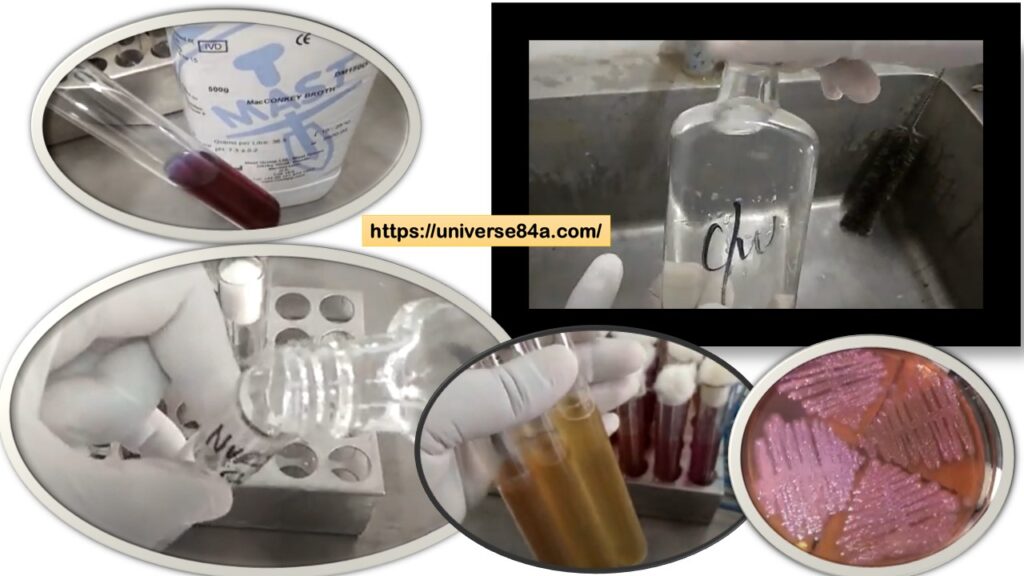
Water culture refers to the growth of microorganisms in a liquid medium that contains water as the primary solvent. This type of culture is commonly used in microbiology research and industry to study the growth and behavior of various microorganisms, such as bacteria, fungi, and algae.
In this culture, microorganisms are grown in a nutrient-rich liquid medium that contains water as the primary solvent. The composition of the medium can vary depending on the type of microorganism being grown and the specific experimental requirements. For example, nutrient broth, tryptic soy broth, and Luria-Bertani broth are commonly used as liquid media for bacterial cultures.
It can be performed using various types of apparatus such as test tubes, flasks, or bioreactors. The culture medium is sterilized prior to inoculation to prevent the growth of any unwanted microorganisms. The inoculum, which contains the microorganisms, is then added to the sterilized medium and allowed to grow under controlled conditions of temperature, pH, and aeration.
It is a useful tool for studying the physiology, metabolism, and genetics of microorganisms. It is also used for the production of various biotechnological products such as antibiotics, enzymes, and vaccines. Water culture is an important technique in microbiology research and has applications in various fields such as medicine, agriculture, and environmental science.
Application
Water culture, also known as liquid culture, is a widely used technique in microbiology that has numerous applications. Here are some of the main uses of this culture:
- Microbial growth and maintenance: Water culture is used to grow and maintain a variety of microorganisms in the laboratory, including bacteria, fungi, and algae.
- Cell culture: It is used to grow and maintain cells of various types, including mammalian cells, plant cells, and insect cells.
- Bioremediation: It is used to study the ability of microorganisms to degrade or detoxify environmental pollutants, such as heavy metals, pesticides, and petroleum products.
- Bioprocessing: Water culture is used in the production of a wide range of biotechnological products, such as antibiotics, enzymes, and vaccines.
- Genetic engineering: Water culture is used in genetic engineering applications to introduce foreign genes into microorganisms or cells.
- Drug discovery: it is used to screen large numbers of microorganisms for their ability to produce natural products with potential therapeutic activity.
- Microbial ecology: it is used to study the diversity and activity of microorganisms in various ecosystems, such as soil, water, and the human gut.
Keynotes
Here are some keynotes on water culture:
- Water culture is a technique used in microbiology to grow and maintain microorganisms in liquid medium containing water as the primary solvent.
- It is commonly used in the laboratory for various applications such as microbial growth and maintenance, cell culture, bioremediation, bioprocessing, genetic engineering, drug discovery, and microbial ecology.
- The composition of the culture medium can vary depending on the microorganisms being grown and the specific experimental requirements.
- Sterilization of the culture medium and equipment is important to prevent contamination with unwanted microorganisms.
- Control of environmental factors such as temperature, pH, and aeration is essential to ensure optimal growth and productivity of the microorganisms.
- It is a useful technique for studying the physiology, metabolism, and genetics of microorganisms, as well as for producing various biotechnological products.
- It has applications in various fields such as medicine, agriculture, and environmental science.
- It is a versatile and powerful tool in microbiology that has numerous applications and is an essential technique for researchers in various fields.
- Overall, this ulture is a versatile and powerful tool in microbiology that has a wide range of applications. It is an essential technique for researchers in various fields, including biotechnology, environmental science, and medicine.