
Blog
Salmonella: Introduction, Pathogenesis, Lab Diagnosis and treatment
 History of Salmonella Salmonella Typhi is also known as Eberth-Gaffkey or Eberth Typhi. Eberth (1880) observed Salmonella into the mesenteric lymph node and spleen of typhoid patients. Gaffney isolated this organism in 1884. Introduction of Salmonella Family: Enterobacteriaceae Gram-negative bacilli, non-sporing, non-encapsulated, aerobic or facultative anaerobes, 2 to 4 × 0.6 µm, most strains are motile except Salmonella gallinarum and pullorum. [embed]https://www.youtube.com/watch?v=aMD8DZGM8fw[/embed] Salmonella Typhi and Paratyphi Morphology 2 to 3 µm Χ 0.6 µm Gram-negative bacilli Motile due to peritrichous flagella Non-...
Giardia: Introduction, morphology, Life cycle, pathogenecity , lab diagnosis and treatment
 Introduction of Giardia Giardia is a genus of anaerobic flagellated protozoan parasites of the phylum metamonad that colonies and reproduce in the small intestines of several vertebrates, causing giardiasis. Their life cycle alternates between a swimming trophozoite and an infective, resistant cyst. Giardia were first described by the Dutch micrscopist Antonie van Leuwenhoek in 1681. The genus is named after French zoologist Alfred Mathieu Gird. Giardia lamblia is also known as: Giardia intestinalis or Lamblia intestinalis and Giardia duodenalis. Geographical...
Antimicrobial Resistance: Introduction, Types and Mechanism
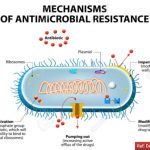 Introduction of Antimicrobial Resistance Antimicrobial Resistance (AMR)can be defined as the temporary or permanent ability of an organism and its progeny to remain viable or multiply under environmental conditions that would destroy or inhibit other cells. An antibiotic is said to be resistant when that antibiotic in prescribed amount and concentration, is unable to kill/ suppress the growth of the pathogens. Types of Antimicrobial Resistance It is of following types and they are- Environmentally mediated antimicrobial resistance...