
Blog
Haemophilus Serotyping: Introduction, Principle, Requirements, Test Procedure, Result Interpretation and Keynotes
 Introduction of Haemophilus Serotyping Haemophilus Serotyping helps to differentiate serotypes of Haemophilus influenzae. Serotypes refer to separate groups within a species of microorganisms that all share a similar property. More specifically, each serotype has the same number of antigens on its surfaces. For example, encapsulated strains of Haemophilus influenzae may be differentiated into 6 serotypes (a to f), of which Haemophilus influenzae serotype b (Hib) is the principal cause of invasive diseases. Serotypes are differentiated on...
Vibrio Serotyping: Introduction, Principle, Requirements, Test Procedure, Result Interpretation and Keynotes
 Introduction of Vibrio Serotyping Vibrio Serotyping helps to differentiate serotypes of Vibrio. Serotypes refer to separate groups within a species of microorganisms that all share a similar property. More specifically, each serotype has the same number of antigens on its surfaces. For example, V.cholerae O1 serovar Inaba, V. cholerae O1 serovar Ogawa, V. cholerae O1 serovar Hikojima. Serotypes are differentiated on the basis of agglutination tests and used to help with the identification of Salmonella, Shigella, Vibrio...
Robertson’s Cooked Meat (RCM) Medium: Introduction, Principle, Composition, Preparation, Test Procedure, Result Interpretation, Uses and Keynotes
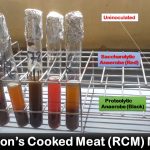 Introduction of Robertson’s Cooked Meat (RCM) Medium Robertson’s Cooked Meat (RCM) Medium is the recommended medium for the cultivation of anaerobic as well as aerobic bacteria. It is especially for pathogenic Clostridium species from clinical, food, and water samples. This can also be used as a maintenance medium for stock cultures of anaerobes as well as aerobes. RCM is also known as cooked meat broth (CMB) since it contains pieces of fat-free minced cooked meat of ox heart...