
Blog
Glass Beads- Introduction, Principle, Test Requirements, Working Mechanism, Application, and Keynotes
 Introduction Glass beads are small, inert, spherical particles widely used in microbiology, molecular biology, and cell culture. Their smooth, durable surface and chemical stability make them suitable for disrupting tissues, homogenizing cells, and aiding in sterilization or agitation processes. Principle The principle of using glass beads is based on mechanical disruption and surface interaction. When combined with shaking, vortexing, or agitation, the beads collide with biological samples, breaking open cells or dispersing microbial clumps, thereby facilitating...
Fungal Pneumonia-Introduction, Causing Common Fungi, Clinical Feature, Lab Diagnosis, Treatment, Prevention, and Keynotes
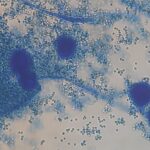 Introduction of Fungal Pneumonia Fungal pneumonia or invasive fungal pulmonary infection is often life-threatening, especially in immunocompromised patients, such as those with cancer, undergoing chemotherapy, or with HIV/AIDS. pulmonary inflammation caused by inhaled fungal spores or hematogenous fungal spread, leading to pneumonia-like illness. Common Fungi Causing Pulmonary Infections: Fungal Pathogen Key Features Common in Aspergillus spp. Acute angle branching septate hyphae Cancer, transplant, ICU Cryptococcus neoformans/gattii Encapsulated yeast HIV/AIDS, malignancy Pneumocystis jirovecii Non-cultivable, alveolar foamy exudate AIDS (CD4 <200)...
Vancomycin-Resistant Enterococcus (VRE)-Introduction, Detection Methods, and Keynotes
 Introduction of Vancomycin-Resistant Enterococcus (VRE) Vancomycin-Resistant Enterococcus (VRE) refers to strains of Enterococcus (primarily E. faecium and occasionally E. faecalis) that have acquired resistance to vancomycin, an important glycopeptide antibiotic used for gram-positive infections. VREs are major nosocomial pathogens, particularly in ICUs, transplant units, and oncology wards. Resistance is usually due to the acquisition of van genes (vanA, vanB, etc.) that alter cell wall precursors from D-Ala-D-Ala to D-Ala-D-Lac, reducing vancomycin binding. Detection Methods for Vancomycin-Resistant Enterococcus (VRE)...