
Bacteria: Motility and Special Tests
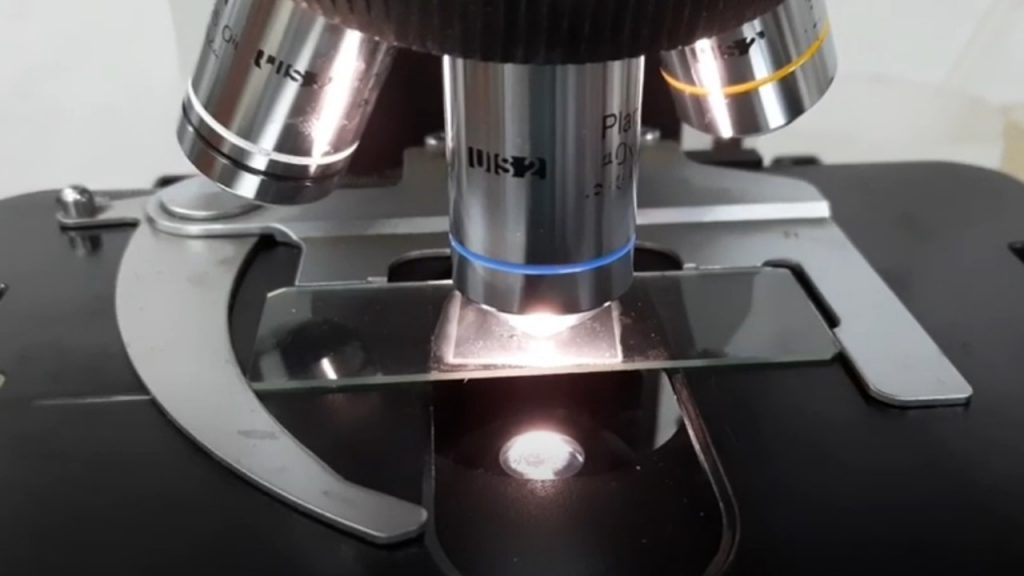
Bacteria special tests
Bacteria special tests are useful characteristic tests for presumptive identification of various bacteria as shown below.
- Hanging drop preparation-motility test: It is the most common test of bacteria to check whether organism motile non-motile ( having flagella or not). If the bacteria are motile, notice for the type of motility e.g. darting motility for Vibrio cholerae and Helicobacter pylori, tumbling motility for Listeria monocytogenes, stately motility for Clostridium, Spinning motility for Fusobacterium gyrans, and gliding motility for Mycoplasma. Note: Swarming motility is a feature of Proteus species and Clostridium tetani and swarming growth is observable on blood agar. Corkscrew motility i.e. lashing, flexion-extension motility for Spirochetes. As you know, bacteria are motile due to flagella and classification of bacteria on the basis of flagella as follows: Atrichous- no flagella e.g. Klebsiella, Shigella, monotrichous-single flagellum at one end e.g. Vibrio cholerae, lophotrichous- group of flagella at one end e.g. Helicobacter pylori, amphitrichous- single flagellum at bot ends i.e. bacteria have a single flagellum on each of two opposite ends (only one flagellum operates at a time, allowing the bacteria to reverse course rapidly by switching which flagellum is active) e.g. Alcaligenes faecalis, peritrichous- flagella all around the body e.g. Salmonella enterica serotype Typhi and Paratyphi and Escherichia coli.
- Darting motility- Vibrio cholerae and Helicobacter pylori : Vibrio cholerae is motile with the single polar flagellum and shows rapid darting like the “Shooting Star” type of motility.
- CAMP(Christie—Atkinson— Munch –Peterson) test– Streptococcus agalactiae
- Satellitism test– Haemophilus influenzae
- String test-Vibrio cholerae
- Milk ring test- Brucella
- Weil -Felix reaction- Typhus fever( Rickettsia)
- Shick test- Corynebacterium diphtheriae
- Mac Fadyean’s reaction- Bacillus anthracis
- Litmus milk test- Enterococcus
- Dick test- Streptococcus pyogenes
- Nagler’s Reaction-Clostridium perfringens
- Francis test-Pneumococcus
- Wasserman’s reaction-Syphilis
- Sereny’s test-toxin( Shigella)
Further Readings
- https://www.researchgate.net/publication/334976878_Hanging_Drop_Examination
- https://www.who.int/cholera/task_force/Interim-guidance-cholera-RDT.pdf
- http://whqlibdoc.who.int/hq/1999/WHO_CDS_CSR_EDC_99.8.pdf
- https://www.ncbi.nlm.nih.gov/pmc/articles/PMC274947/
- https://www.ncbi.nlm.nih.gov/pmc/articles/PMC268893/
- https://www.sciencedirect.com/topics/agricultural-and-biological-sciences/milk-ring-tests
- https://books.google.com.np/books?id=QHjt676mCs0C&pg=PA140&lpg=PA140&dq=Weil+-Felix+reaction+for+rickettsia&source=bl&ots=sEgJnebg6c&sig=ACfU3U2QuHq0x8Qe9Jcg8LRahGODTwOc7A&hl=en&sa=X&ved=2ahUKEwjOvJOa6vvxAhUwwzgGHTRWCDgQ6AEwGnoECBcQAw
- https://www.ncbi.nlm.nih.gov/pmc/articles/PMC2304433/
- https://www.researchgate.net/figure/Sereny-test-with-Shigella-in-immunized-and-nonimmunized-guinea-pigs-A-control-pigs-that_fig5_320133913
[3185 visitors]