
Cord Factor: Introduction, Clinical Significance, and Keynotes
Introduction and Structure
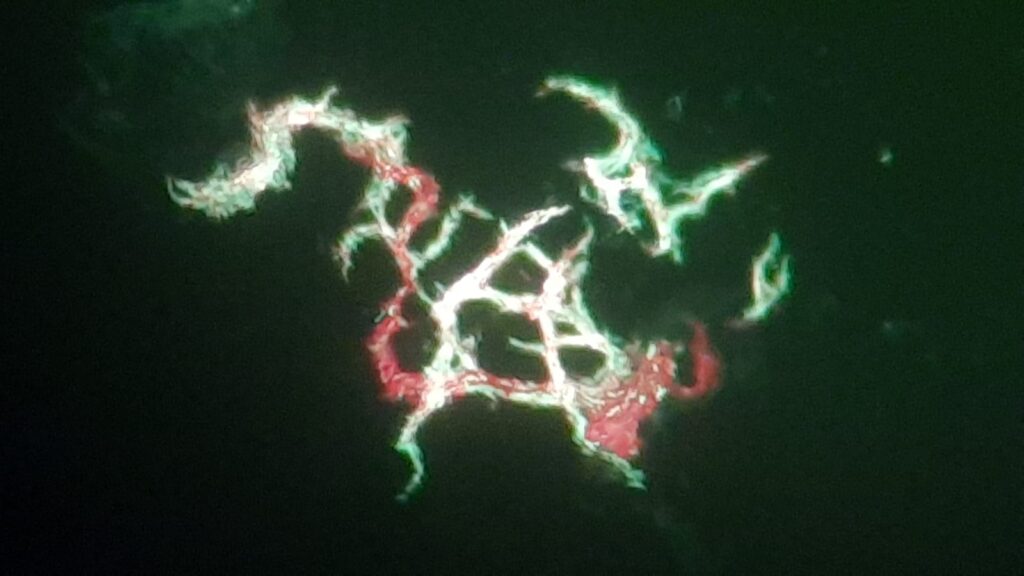
Cord factor, chemically known as Trehalose 6,6′-dimycolate (TDM), is a critical cell wall glycolipid found in virulent strains of Mycobacterium tuberculosis and other related species. It is the most abundant lipid on the exterior of the mycobacterial cell wall and is a primary driver of the bacteria’s pathogenicity.
- Definition: A toxic glycolipid that causes mycobacteria to grow in characteristic “serpentine cords” (rope-like aggregates) when viewed under a microscope.
- Composition: It consists of a trehalose sugar molecule esterified to two molecules of mycolic acid (long-chain fatty acids).
- Discovery: Identified in the 1950s by Hubert Bloch, who noted that removing this lipid from the bacterial surface abolished its virulence.
Clinical Significance
The clinical impact of cord factor is defined by its ability to manipulate the host’s immune system and facilitate bacterial survival:
- Virulence Factor: It is essential for the survival of M. tuberculosis within host macrophages.
- Immune Evasion: It inhibits phagosome-lysosome fusion, preventing the host’s immune cells from digesting and killing the bacteria.
- Granuloma Formation: TDM is a potent inducer of granulomatous inflammation. It stimulates the production of pro-inflammatory cytokines such as TNF-α, IL-1β, and IL-6.
- Cachexia: High levels of TDM stimulate the overproduction of TNF-α (also known as cachectin), leading to the profound weight loss and muscle wasting (cachexia) seen in advanced tuberculosis patients.
- Diagnostic Utility: The observation of “cording” in cultures is a rapid presumptive indicator for the presence of the Mycobacterium tuberculosis complex (MTBC).
Keynotes
- Mechanism of Action: Recognition of TDM by the host’s Mincle receptor (a C-type lectin) triggers the inflammatory signaling pathway.
- Toxicity Confirmation: Its toxicity is “conformation-dependent.” It is relatively non-toxic when in a micellar form on the bacterium, but becomes lethal to macrophages when it forms a monolayer on lipid surfaces.
- Drug Target: Because it is vital for cell wall integrity, enzymes involved in its synthesis (like the Antigen 85 complex) are prime targets for new anti-TB drugs.
- Occurrence: While most famous in M. tuberculosis, cord factor or similar cording behavior is also found in M. bovis, M. marinum, and some Nocardia species.
Further Readings
- https://www.annclinlabsci.org/content/36/4/371.full
- https://en.wikipedia.org/wiki/Cord_factor
- https://pmc.ncbi.nlm.nih.gov/articles/PMC3682682
- https://www.sciencedirect.com/topics/biochemistry-genetics-and-molecular-biology/cord-factor
- https://pmc.ncbi.nlm.nih.gov/articles/PMC3039431/
- https://www.researchgate.net/publication/220018678_The_Cord_Factor_Structure_Biosynthesis_and_Application_in_Drug_Research_-_Achilles_Heel_of_Mycobacterium_tuberculosis
- https://www.scielo.br/j/bjps/a/g4yqMdrW4P5b7xhLjWd8Jhd
- https://pmc.ncbi.nlm.nih.gov/articles/PMC3553576
- https://www.frontiersin.org/journals/immunology/articles/10.3389/fimmu.2013.00005/full
- https://www.ijidonline.com/article/S1201-9712(14)01239-9/fulltext
- https://www.osmosis.org/learn/Nocardia
- https://www.sciencedirect.com/topics/pharmacology-toxicology-and-pharmaceutical-science/nocardiaceae
[1066 visitors]