
Microbiological Approaches for Early Diagnosis of Infection: Introduction and Its Applications
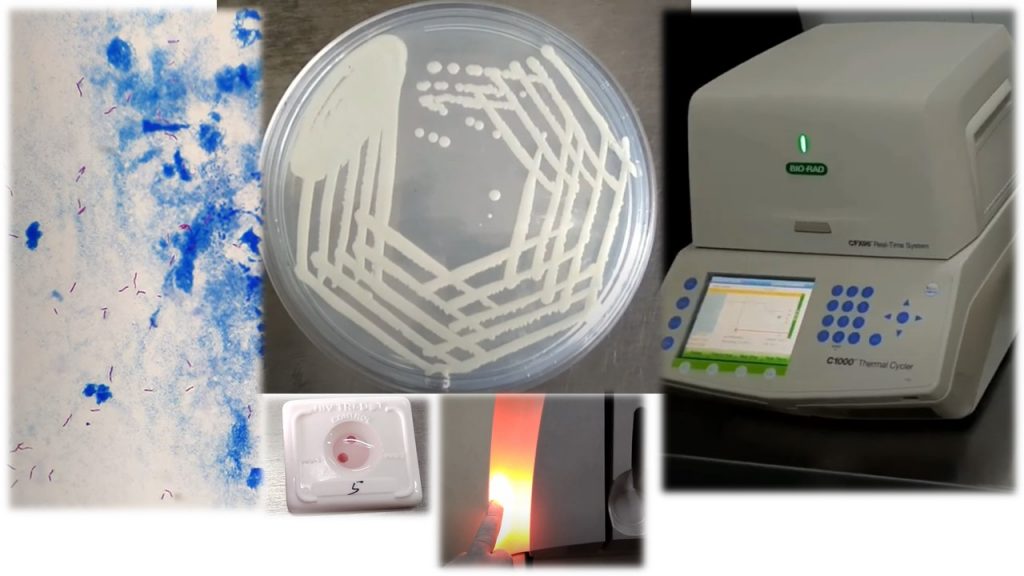
Microbiological Approaches for Early Diagnosis of Infection
Microbiological approaches are very useful for the early diagnosis of infection since automation in clinical microbiology is progressing rapidly. Much attention has been given to molecular biological techniques for timely diagnosis of bacterial infection so that an appropriate therapy could be given to the patient if the nature of the infection is known as in the early stage of the disease. In this way, we can definitely reduce morbidity and mortality rates due to infectious diseases. Therefore, microbiologists are working very hard to develop new tools to fulfill the need of these demands for the prevention and control of life-threatening diseases. Apart from this, rapid and accurate diagnosis of etiological agents will improve the quality of health care costs in several ways.
- Earlier institutions of appropriate therapy will reduce infection-related morbidity and mortality.
- Early diagnosis may prevent the rapid dissemination of an epidemic.
- Narrow spectrum antimicrobial agents can be used earlier thereby decreasing expenditure and risk of adverse drug events and risks of developing resistance.
- Invasive diagnostic procedures can be deferred or even avoided.
- Earlier detection helps in the prevention and control of disease in time before it is spread by tracing the origin of the organism.
It is believed that the tests based on molecular biological techniques will offer the potential for decreasing the test time. However, it is also important to make a decision when to use these techniques such as DNA/DNA hybridization, PCR. Since these are very costly, difficult in carrying the tests although they are very sensitive.
Various conventional and molecular techniques are available to diagnose bacterial infection.
Direct detection of microorganisms in the sample for Microbiological approaches for early diagnosis of infection
- Through staining such as Acid Fast Bacilli( AFB) stain or Ziehl-Neelsen(Z-N) Stain, Immunofluorescence stain (Auramine- Rhodamine stain), and serology by detecting antigen.
- Immunomagnetic separation of Mycobacterium tuberculosis: Which includes capturing and concentration of M. tuberculosis in a sample with the use of magnetic beads coated with antibodies.
Magnetic polystyrene microsphere coated with antibodies to M. tuberculosis is mixed into the specimen. These antibodies will trap scattered from M. tuberculosis into the specimen. The beads and bound organisms are collected through the use of Magnet. The smear is made and stained with the use of the conventional method. It improves the detection level of the organisms by 2-3 times more than the conventional method. This method is being used successfully for the detection of M. tuberculosis in CFS, Sputum, and other clinical samples.
3. Routine culture of bacteria
4. BACTEC system ( Rapid growth detection system): with the use of isotope-labeled substrate in the growth medium.
No- cultural techniques other than DNA technology for Microbiological approaches for early diagnosis of infection
- Enzyme-Linked Immunosorbent Assay (ELISA)
- Co-agglutination
- Latex agglutination
- Counter Current Immunoelectrophoresis (CCIEP)
- Gas-Liquid Chromatography (GLC)
- Limulus Amoebocyte Assay
The epidemiological market for strain characterization based on the conventional method
- Biotyping
- Antibiogram
- Bacteriophage typing
- Bacteriocin typing
- Dienes phenomenon
- Bettelheim reaction ( colony incompatibility test)
Molecular techniques for Microbiological approaches for early diagnosis of infection
- Plasmid analysis
- Restriction Endonuclease digestion of DNA electrophoresis
- DNA/DNA hybridization
- Pulsed Field Gel Electrophoresis
- Ribotyping
- In situ hybridization: Hybridization carried out in tissue histopathological specimen
Advantages
- No need to culture
- No need to have live organisms
- Useful for the non-cultivable organism
- Even useful poorly preserved postmortem tissue samples from field material
- Polymerase Chain Reaction ( Saiki et. al. 1988; Neil et.al. 1994)
Although PCR, in its various forms, has great promise it will not totally replace the older technique in clinical microbiology laboratory due to many reasons
- Needs technically skilled manpower
- Expensive
- Needs technically skilled manpower
- Though it is sensitive contamination is a problem.
- Possibility of obtaining false-positive results by careless handling of the materials and reagents
Reverse Transcription Polymerase Chain Reaction (RT-PCR) for Microbiological approaches for early diagnosis of infection
A single strand of RNA of negative sense cannot be amplified directly by PCR. Therefore, this must be copied into DNA by reverse transcriptase enzyme in a two-step reaction known as RT-PCR.
Further Reading
- https://www.ncbi.nlm.nih.gov/pmc/articles/PMC1390794/
- https://www.researchgate.net/publication/329484057_New_Microbiological_Techniques_in_the_Diagnosis_of_Bloodstream_Infections
- https://academic.oup.com/cid/article/31/3/739/297506
- https://www.hindawi.com/journals/ipid/2009/278246/
- https://www.hindawi.com/journals/bmri/2017/3942801/
- https://wwwnc.cdc.gov/eid/article/7/2/70-0312_article
- https://www.mayoclinic.org/diseases-conditions/infectious-diseases/diagnosis-treatment/drc-20351179
- https://www.merckmanuals.com/home/infections/diagnosis-of-infectious-disease/diagnosis-of-infectious-disease
- https://bitesizebio.com/36644/methods-microbial-identification/