
Medical Microbiologist Post in Public Service Commission: Level, Examination Structure and Syllabus
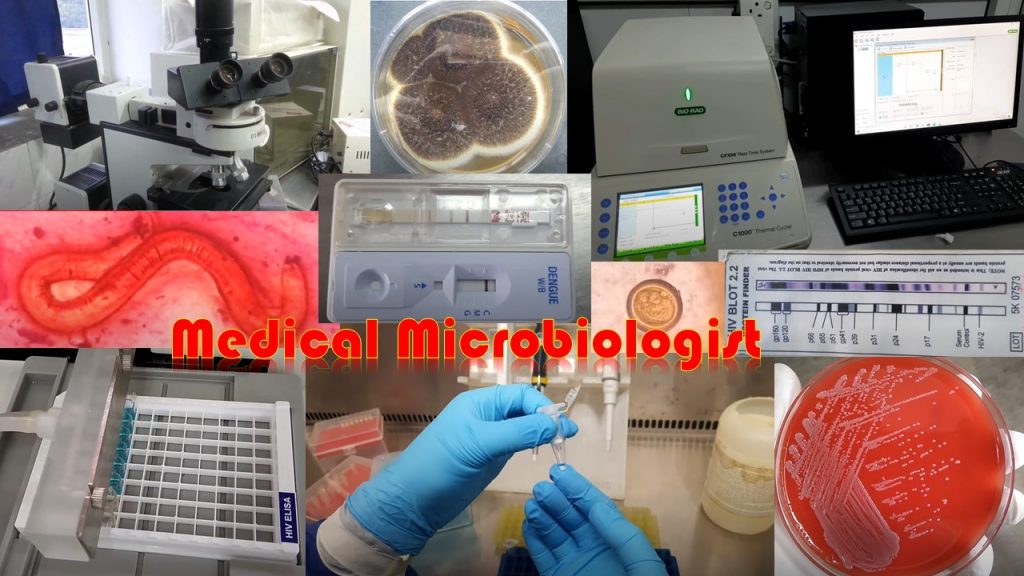
Medical Microbiologist Post
Level: 9th ( M.Sc. Clinical/Medical Microbiologist)
Examination Structure for Medical Microbiologist Post
The examination will complete in two phases.
Phase first: Written Examination
Phase second: Interview
The written examination will occur in two papers,
Paper 1: General Subject
Paper 2: Technical Subject
Syllabus for Medical Microbiologist Post
Paper I: General Subject for Medical Microbiologist Post
(Management and General Health Issues)
Part I: Management
- Management: – concept, principles, functions, scope, role, level, and skills of
managers - Hospital management
- Health manpower recruitment and development
- Participative management: concept, advantages and disadvantages, techniques of participation
- Time management: concept, advantages, and disadvantages
- Conflict management: concept, approaches to conflict, levels of conflict, causes of conflict, and strategies for conflict management
- Stress management: concept, causes and sources of stress, techniques of stress management
- Appreciative inquiry: concept, basic principles, and management
- Financial management: concept, approaches, budget formulation and
implementation, auditing, and topics related to fiscal management - Human resource management: concept, functions, and different aspects
- Planning: concept, principles, nature, types, instrument, and steps
- Leadership: concept, functions, leadership styles, leadership, and management effectiveness
- Coordination: concept, need, types, techniques, and approaches of effective coordination
- Communication: concept, communication process, and barrier to effective
communication, techniques for improving communication
Part II: General Health Issues for Medical Microbiologist Post
- Present Constitution of Nepal (health and welfare issues)
- National Health Policy, 2071
- Second long term health plan (1997-2017)
- Health services act 2053, health service regulation, 2055
- The organizational structure of the Ministry of Health at National, Regional and
District and Below - International health agencies: role and responsibilities of WHO, UNICEF,
UNFPA and interagency relationships - Professional council and related regulations
- Medical ethics in general and its application
- Indigenous and traditional faith healing and health practices
- Supervision, types, and its usage in the health sector
- Monitoring and evaluation system in health
- Health management information system
- Health insurance and financing in health care
- Effects of the environment in public health: air pollution, domestic pollution, noise pollution
- Importance of water, sanitation, and hygiene in public health
- Effects of disaster in public health: deforestation, landslide, flood, earthquake, and fire
- Health volunteers involvement in health service delivery
- Community involvement in health service delivery
- Counseling: – concept, type, importance, and its application in health service
delivery
Paper-II: Technical Subject for Medical Microbiologist Post
1. General Microbiology:
1.1 History and development of microbiology, Eukaryotes &prokaryotes, microbial world
1.2 Nomenclature and classification of microbes. Determinative characteristics of medically important bacteria, viruses, fungi, and protozoan parasites
1.3 Growth and nutrition of microbes, microbial metabolism
1.4 Bacterial ecology-normal flora of the human body, hospital environment, air, water, and milk
1.5 Host-parasite relationship
1.6 Methods of anaerobiosis
1.7 Different types of instruments used in microbiology and their working principle, Different types of microscopes, including phase contrast and interference microscope. Maintenance of microscope
1.8 Techniques of cultivation, isolation, and preservation of various microorganisms
1.9 Microscopy, culture sensitivity, serological and molecular methods for
identification of various microorganisms
1.10 Sterilization, disinfection and antiseptics, different ways of sterilization by
physical, chemical, radiation and filtration and its applications, relationship
between disinfectants and antiseptics, disinfection rate of microorganisms.
1.11 Media preparation, preparation of reagents and stains
1.12 Collection and transportation of specimens for Microbiological investigations such as Blood, Urine, Throat swab, Rectal swab, Stool, Pus, OT specimens, and other body fluids
1.13 Care and maintenance of common laboratory equipment
1.14 Staining techniques in microbiology
1.15 Quality control and Quality Assurance in Microbiology.
1.16 Various levels of Biosafety and their requirements, biorisk groups
1.17 Healthcare-associated infections- prevention and control, laboratory waste management
1.18 Water culture for coliform organisms
1.19 Air sampling for organism isolation
1.20 Accreditation of laboratories
1.21 Care of Laboratory animals
1.22 Ethics in research in microbiology
2. Bacteriology:
2.1. Bacterial anatomy, Properties, epidemiology, transmission, methods of isolation, identification, pathogenesis, toxins and enzymes production, antigen structures, and laboratory diagnosis of
2.1.1 Aerobic/microaerophilic gram-negative rods and cocci: Campylobacter,
Helicobacter, Brucella, Legionella, Neisseria, Branhamella, Kingella,
Moraxella, Acinetobacter, Alcaligenes, Bordetella, Pseudomonas,
Francisella
2.1.2 Facultative anaerobic gram-negative rods: Providencia, Salmonella, Shigella, Yersinia, Gardnerella, Vibrio, Plersomonas, Aeromonas, Escherichia coli, Citrobacter, Hafnia, Morganella, Enterobacter, Klebsiella, Proteus, Serratia,
Pasteurella, Hemophilus
2.1.3 Gram-negative anaerobic rods and cocci: Bacteroides, Veillonella
2.1.4 Gram-positive cocci: Micrococcus, Staphylococcus, Streptococcus,
Peptococcus, Peptostreptococcus
2.1.5 Gram-positive spore-forming rods and cocci: Bacillus, Clostridium
2.1.6 Gram-positive non-sporing rods: Lactobacillus, Listeria
2.1.7 Actinomycetes and related bacteria: Actinomyces, Nocardia
Mycobacterium, Corynebacterium, Mycoplasma
2.1.8 Spirochetes: Leptospira, Treponema, Borrelia
2.1.9 Rickettsias: Coxiella, Rickettsia, Chlamydia
2.2. Isolation and Enumeration techniques of bacteria
2.3. Identification based on morphological, cultural, and biochemical properties
2.4. Bacteria, isolation, detection, and identification using rapid and automated methods
2.5. Principle, Procedure and application of Bio typing, Serotyping, Phage typing
2.6. Types of antibiotics, Mechanism of action of various antibiotics, spectrum, antibiotic resistance
2.7. Antibiotic susceptibility test: principle, procedure, and interpretation
2.8. Collection and processing of various clinical samples.
2.9. Preservation of bacteria
3. Virology:
3.1 General structure, properties, and classification schemes of the virus, virus-cell interactions, and viral replication
3.2 Classification, structure, medical importance, pathogenesis, and laboratory
diagnosis, prevention, and control of Poxviruses, Herpes viruses, Adenoviruses,
Picornavirus, Orthomyxovirus, Paramyxovirus, Arbovirus, Rhabdoviruses,
Hepatitis virus, Retroviruses (HIV, HTLV), other medically important and new
emerging viruses,
3.3 Principles of Bio-safety and biosecurity requirements of the virology laboratory
3.3.1 International Health Regulation 2005 (IHR 2005): Introduction, Scope and
Application
3.3.2 Classification of Biological Substances: IATA Guideline
3.4 Biological Sample handling, Packaging, and transportation of Risk group A, Risk group B, and Exempt
3.5 Methods of cultivation and purification of viruses
3.6 Principle, procedure, and applications of serodiagnostic methods in virology haemagglutination and haemagglutination-inhibition tests, Complement fixation, neutralization, Western blot, flow cytometry, and immunochemistry, and other recent techniques
3.7 Principle, procedure, and application of Nucleic acid-based diagnostic methods in virology: Nucleic acid hybridization, polymerase chain reaction, microarray, and nucleotide sequencing
3.8 Microscopic techniques- Fluorescence, confocal, and electron microscopic techniques in virology
3.9 Diagnostic Virology procedures:
3.9.1 Preparation of tissue media and reagents sterility checking Glassware
decontamination, washing, sterilization
3.9.2 Propagation of viruses; Tissue culture and egg inoculation technique for the isolation of common medically important viruses; Routes of inoculations in
embryonated eggs
3.9.3 Preparation of virus stocks; plaque assay and determination of TCID50
3.9.4 Detection of Virus Antigen by ELISA; Immunofluorescence assay;
Haemagglutination; Agar gel diffusion; Polymerase chain reaction
4. Mycology for Medical Microbiologist Post
4.1 General properties and classification of fungi
4.2 Morphology, pathogenesis and diagnostic laboratory tests for superficial, deep, and systemic mycosis
4.3 Classification of medically important fungi and general characteristics of
Aspergillus, Candida, Fusarium, Cryptococcus, Histoplasma, Trichophyton,
Epidermophyton, Blastomyces, Cryptococcus, Tinea, Microsporum,
Coccidioidomyces, Paracoccidioidomyces; Fungal toxins and Allergies,
4.4 Laboratory Diagnosis of Fungal diseases: Sample collection and processing for diagnosis of Subcutaneous, Systemic and Opportunistic Mycoses
4.5 Diagnostic procedures :
4.5.1 Preparation of fungal stains and staining techniques
4.5.2 Fungal culture techniques
4.5.3 Isolation and characterization of medically important fungi from clinical
specimens
5. Parasitology for Medical Microbiologist Post
5.1 Study of morphology, developmental stages, symptoms, pathogenesis,
epidemiology, diagnosis, treatment, and prevention of the following parasites:
Entamoeba, Giardia, Trichomonas, Ascaris, Ancylostoma (Hookworm),
Enterobius, Trichuris, Strongyloides, Taenia, Echinococcus, Hymenolepis, Brugia, Loa loa, Onchocerca, Dracunculus, Plasmodium, Leishmania, Toxoplasma, Wuchereria
5.2 Entomology: common arthropods and other vectors viz. mosquito, sandfly, ticks, mites, cyclops, louse
5.3 Diagnostic Parasitology Experiments :
5.3.1 Stool sample collection and processing for parasites by microscopy
5.3.2 Occult blood test in the stool sample
5.3.3 Stool culture
5.3.4 Microscopic observation of Entamoeba, Giardia, Plasmodium, Leishmania, Taenia, Ascaris and other medically important protozoa and helminthic parasites, ova count
5.3.5 Laboratory diagnosis of blood and tissue parasites – preparation of thick and thin smear of a blood sample, staining, and identification
5.3.6 Routine and special tests were done on a stool
6. Immunology for Medical Microbiologist Post
6.1 History of immunology, innate and acquired immunity, mechanisms of innate immunity inflammation-inflammatory cells, mediators, inflammatory response types, antigens, cells, and organs of the immune system
6.2 Immunoglobulin: Structure and function; regulation of immune response
6.3 Theory of Hypersensitivity reactions, their types, mechanism, examples
6.4 Complement system and its roles in disease
6.5 Transplantation Immunology: Major histocompatibility complex, their types, genetics, Role of MHC in organ transplant, MHC association with diseases, Principle of transplantation, Graft rejection
6.6 Advances in the development of vaccines
6.7 Principle, procedure and applications of Serological and immunological Methods: Agglutination and Precipitation tests, Immunostaining and Immunofluorescence test, ELISA, Complement fixation, Radioimmunoassay (RIA), and Immunoelectrophoresis
6.8 Quality control and evaluation of kits used in laboratory
6.9 Immunological techniques:
6.9.1 Antigen preparation- Protein antigen, Carbohydrate antigen, synthetic
peptide, recombinant protein antigens; Basic concepts, methods, purification
and applications
6.9.2 Optimization of antigen and antibody
6.9.3 Monoclonal and polyclonal antibodies; preparation, applications
6.9.4 Preparation, preservation, and titration of complement
6.9.5 HLA typing and cross-matching
7. Molecular Biology for Medical Microbiologist Post
7.1 Chromosomes structure, chromosomal abnormalities, mutations, Genome organization in prokaryotes and eukaryotes. Plasmids: nature, classification,
properties and replication
7.2 Collection, preservation, and transport of specimen for molecular testing
7.3 Procedure of Karyotyping and other methods of chromosomal analysis in various specimens
7.4 Recombinant DNA technology: Principles, concept, application
7.5 Gene library
7.6 Use of Internet, Public domain databases for molecular biology
7.7 Molecular Techniques:
7.7.1 Isolation of plasmids, DNA, RNA, Proteins
7.7.2 PCR
7.7.3 Electrophoresis
7.7.4 Chromatography
7.7.5 Blot techniques
7.7.6 Hybridization techniques
7.7.7 Microarray; DNA and Protein Microarray
7.7.8 Gene sequencing
7.7.9 Recent advances in molecular medical biology
8. Public Health Microbiology for Medical Microbiologist Post
8.1 Epidemiology of infectious diseases
8.2 Microbial infections and intoxications: Outbreak investigations, laboratory testing procedures, and preventive measures for foodborne, waterborne, airborne, vector-borne diseases
8.3 Laboratory-based surveillance in microbiology (ie. Influenza surveillance,
Antimicrobial resistance surveillance, HIV/ Hepatitis Surveillance, Microbiological Surveillance of drinking water)
8.4 Biostatistics methods useful in public health
Reference
- https://psc.gov.np/