
Simulated Respiratory Secretion (SRS): Introduction, Application, Advantage and Disadvantage
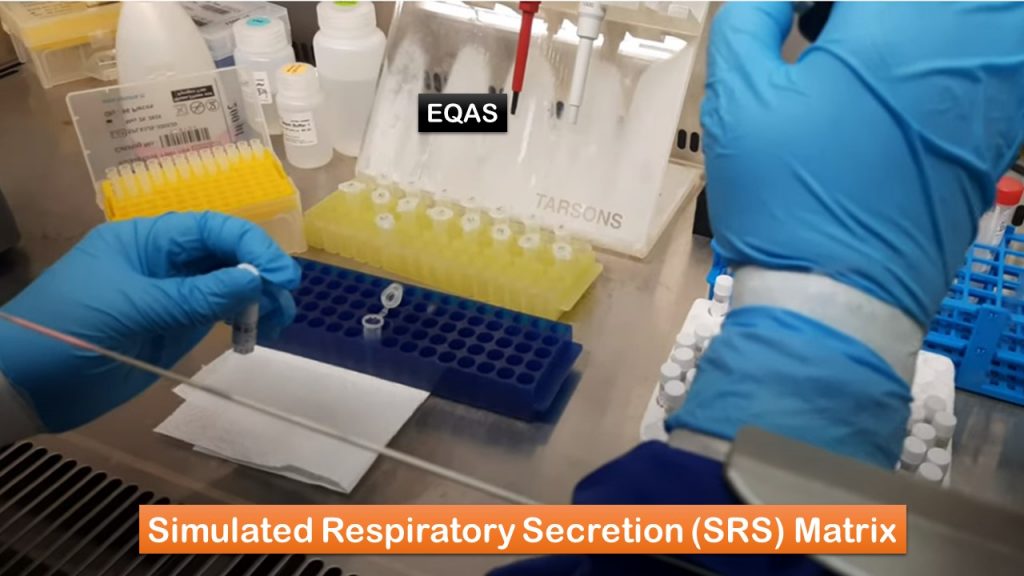
Introduction of Simulated Respiratory Secretion
The simulated respiratory secretion brief form is SRS. It is a matrix that acts as a surrogate for clinical samples. SRS is beneficial due to having following reasons-
Clinical samples can be difficult to obtain.
It may deteriorate over time.
It is also inconsistent in composition. SRS is very common nowadays for monitoring the validity of analytical testing related to the Influenza virus and also in SARS-CoV-2. Its composition is well maintained with major respiratory secretion components like electrolytes (Na+, K+, Ca2+), cells, albumin IgG, IgM, and mucin. The composition also depends on testing parameters like nucleic acid amplification and rapid antigen assays and so on.
Application of Simulated Respiratory Secretion
Simulated respiratory secretion (SRS) matrix not only minimizes infection from aerosols but also improves the quality of testing analytes.
- SRS uses in the influenza virus for evaluation of nucleic acid amplification and rapid antigen assays.
- Similarly, it also applies in severe acute respiratory syndrome coronavirus 2 (SARS-CoV-2).
Advantage of Simulated Respiratory Secretion
- SRS reduces false-negative results that arise from clinical samples due to samples are not collected from anatomical sites where the virus is replicating and shed, or if samples are not handled, stored, and transported appropriately.
- Preferably, the SRS matrix would be applicable to all methods or platforms. It also enables a standardized means to assess analytical accuracy, especially with novel and newly emerging viruses like SARS-CoV-2.
- SRS matrix approach could enable developers to more quickly assess the analytical accuracy of existing tests, validate changes as needed, and also facilitate analytical assessments with new tests of viruses like Influenza and SARS-CoV-2.
- Simulated respiratory secretion (SRS) matrix also minimizes infection from aerosols.
Disadvantages of Simulated Respiratory Secretion
- It is a synthetic preparation that can not provide a 100% clinical environment.
- SRS formulations sometimes may be costly.
- Some tests may be biased.
- Even being matrix storage temperature is the same as clinical specimens.
Keynotes on SRS
- There is no known test method that can offer complete assurance of products derived from inactivated microorganisms (M/Os) and/or human sources that will not transmit infection.
- The quality of the specimens collected and prepared plays a big role in making a correct clinical diagnosis. False-negative tests can occur if samples are not obtained from anatomical regions where the virus is multiplying and shed, or if samples are not handled, stored, or transported properly, regardless of the analytical validity of any given assay method.
Further Reading on Simulated Respiratory Secretion
- https://www.ncbi.nlm.nih.gov/pmc/articles/PMC5117718/
- https://rcpaqap.com.au/resources/safe-handling-rcpaqap-proficiency-test-items/
- https://www.sciencedirect.com/science/article/pii/S2468042718300071