
Lungene COVID-19 Antigen Rapid Test-Introduction,Principle, Test Requirements, Test Procedure, Application, and Keynotes
Introduction
The Lungene COVID-19 Antigen Rapid Test is a diagnostic tool used to detect the presence of SARS-CoV-2 antigens in human respiratory specimens. It is designed to provide a quick and reliable result in the detection of COVID-19.
This test is a lateral flow immunoassay that uses specific antibodies to detect the viral antigens in the patient’s respiratory specimens, such as nasal or throat swabs. The test can be performed on-site, and it does not require any additional equipment or special training to use.
The Lungene COVID-19 Antigen Rapid Test has been authorized by several regulatory agencies, including the U.S. Food and Drug Administration (FDA) for emergency use. However, it is important to note that the test has some limitations, and a negative result does not completely rule out the presence of COVID-19.
Therefore, it is crucial to follow up with confirmatory tests and consult with a healthcare provider if symptoms persist, even if the test result is negative.
Principle
The principle of COVID-19 antigen rapid test is based on the detection of viral antigens in a patient’s respiratory specimens using specific antibodies. The test utilizes a lateral flow immunoassay, which involves the use of two types of antibodies: a capture antibody and a detection antibody.
The patient’s respiratory specimen, such as nasal or throat swab, is collected and added to the test cassette. The specimen then migrates through the cassette, and if the SARS-CoV-2 antigen is present, it will bind to the capture antibody, forming a complex.
The complex then moves further along the test strip and is captured by the detection antibody, which is bound to colored particles. If the antigen is present in the sample, a visible line will appear on the test strip, indicating a positive result.
A control line is also included in the test to ensure the test has worked correctly. This control line should always appear, regardless of the presence of the viral antigen, indicating that the test has worked correctly.
Types of Manufacturers for COVID-19 Antigen Rapid Test kits-
There are several manufacturers that produce COVID-19 antigen rapid test kits. Some of the most well-known manufacturers include:
Abbott Laboratories: They produce a rapid antigen test called BinaxNOW COVID-19 Ag Card.
Roche: They produce a rapid antigen test called SARS-CoV-2 Rapid Antigen Test.
BD (Becton, Dickinson and Company): They produce a rapid antigen test called BD Veritor System for Rapid Detection of SARS-CoV-2.
Quidel Corporation: They produce a rapid antigen test called Sofia SARS Antigen FIA.
LumiraDx: They produce a rapid antigen test called LumiraDx SARS-CoV-2 Ag Test.
Siemens Healthineers: They produce a rapid antigen test called CLINITEST Rapid COVID-19 Antigen Test.
Hangzhou Laihe Biotech Co., Ltd.: They produce a rapid antigen test called LYHER COVID-19 Antigen Test Kit.
It is important to note that different manufacturers may have different sensitivities, specificities, and performance characteristics, so it is important to choose a test that is appropriate for the intended use and to follow the manufacturer’s instructions for use.
Test Requirements
The Lungene COVID-19 Antigen Rapid Test has some requirements for sample collection and test administration. Here are some key requirements for the test:
- Respiratory specimen collection: The test requires a respiratory specimen, such as nasal or throat swabs, collected by a healthcare professional or trained individual.
- Sample preparation: The respiratory specimen should be collected and prepared according to the manufacturer’s instructions, which may include adding a buffer solution to the sample to help release the viral antigens.
- Test administration: The test should be performed by a trained individual following the manufacturer’s instructions. The test cassette should be kept at room temperature, and the respiratory specimen should be added to the sample well of the cassette.
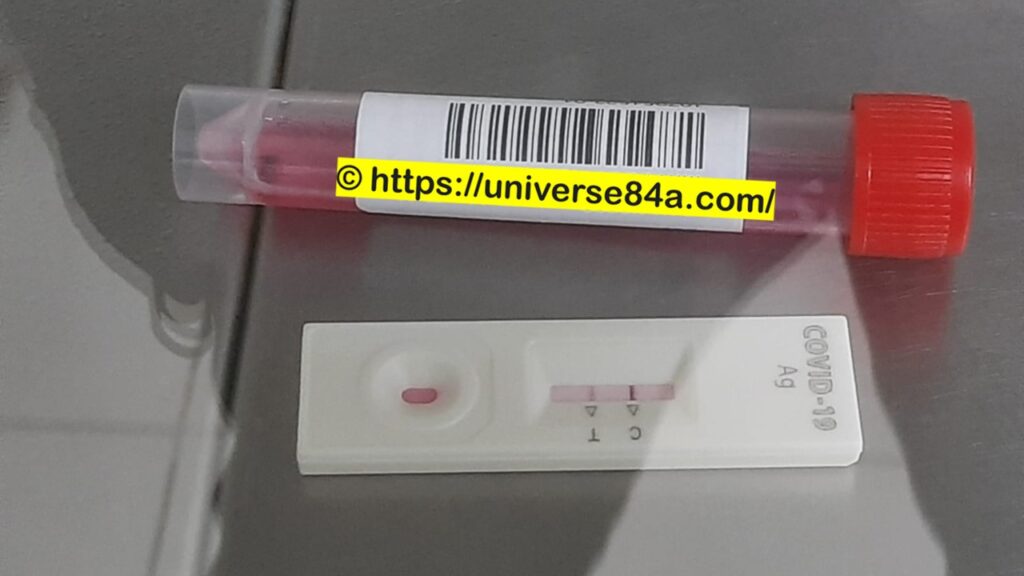
- Test interpretation: The test results should be interpreted according to the manufacturer’s instructions. A visible line in the control region indicates that the test has worked correctly. A visible line in the test region indicates a positive result for SARS-CoV-2 antigen.
Test Procedure
The Lungene COVID-19 Antigen Rapid Test is a lateral flow immunoassay that detects SARS-CoV-2 antigens in respiratory specimens. Here are the general steps for conducting the test:
- Collect respiratory specimen: Collect a respiratory specimen (nasal or throat swab) from the patient according to standard procedures.
- Prepare the specimen: Place the swab into a collection tube or the buffer solution provided with the test kit to release the viral antigens.
- Apply the specimen to the test cassette: Open the test kit and place the test cassette on a flat surface. Using the dropper provided, add 3-4 drops of the specimen/buffer solution to the sample well of the test cassette.
- Read the results: Wait for 10-15 minutes and read the results. A positive result will show two visible lines (one in the control region and one in the test region), indicating the presence of SARS-CoV-2 antigens. A negative result will show one visible line in the control region only. If there is no visible line in the control region, the test is invalid, and the test should be repeated.
Uses
The Lungene COVID-19 Antigen Rapid Test is a diagnostic tool that has several applications, including:
Point-of-care testing: The test can be performed on-site, making it suitable for use in settings with limited access to laboratory facilities, such as primary care clinics, urgent care centers, and nursing homes.
Early detection: The test can detect SARS-CoV-2 antigens in respiratory specimens early in the course of the infection, making it useful in identifying asymptomatic and pre-symptomatic individuals who may be unknowingly spreading the virus.
Contact tracing: The test can aid in contact tracing efforts by quickly identifying individuals who may have been exposed to COVID-19 and may need to isolate to prevent further transmission.
Screening: The test can be used as a screening tool in high-risk populations, such as healthcare workers, essential workers, and individuals in congregate settings.
Public health surveillance: The test can provide valuable data on the prevalence of COVID-19 in a population, which can inform public health interventions and response efforts.
Keynotes
Here are some keynotes on the Lungene COVID-19 Antigen Rapid Test:
- The Lungene COVID-19 Antigen Rapid Test is a diagnostic tool that detects SARS-CoV-2 antigens in respiratory specimens.
- The test is designed for use in point-of-care settings, and results can be obtained within 10-15 minutes.
- The test requires a respiratory specimen, such as a nasal or throat swab, collected by a healthcare professional or trained individual.
- The test has a high specificity (the ability to correctly identify negative cases) but a lower sensitivity (the ability to correctly identify positive cases) compared to molecular PCR tests.
- A negative result does not completely rule out the presence of COVID-19, and confirmatory tests should be performed if there is a high index of suspicion.
- The test is not intended to be used as the sole basis for diagnosis or treatment decisions.
- The test should be used in conjunction with clinical evaluation and other diagnostic tests as appropriate.
- The Lungene COVID-19 Antigen Rapid Test has some limitations and should be used in accordance with the manufacturer’s instructions and relevant regulatory guidelines.
- It is important to follow infection control and biosafety measures when collecting and handling respiratory specimens and conducting the test.
- The Lungene COVID-19 Antigen Rapid Test can aid in the early detection, screening, contact tracing, and public health surveillance of COVID-19.
Further Readings
- Lungene Rapid Test. (n.d.). Retrieved from https://lungene.com/product/lungene-rapid-test/
- Huang, A. T., Garcia-Carreras, B., Hitchings, M. D. T., Yang, B., Katzelnick, L. C., Rattigan, S. M., … & Bhatt, U. S. (2020). A systematic review of antibody mediated immunity to coronaviruses: kinetics, correlates of protection, and association with severity. Nature Communications, 11(1), 1-16.
- Dinnes, J., Deeks, J. J., Berhane, S., Taylor, M., Adriano, A., Davenport, C., … & Ferrante di Ruffano, L. (2021). Rapid, point‐of‐care antigen and molecular‐based tests for diagnosis of SARS‐CoV‐2 infection. Cochrane Database of Systematic Reviews, 3(3), CD013705.
- Centers for Disease Control and Prevention. (2021). Interim Guidance for Antigen Testing for SARS-CoV-2. Retrieved from https://www.cdc.gov/coronavirus/2019-ncov/lab/resources/antigen-tests-guidelines.html
- World Health Organization. (2021). Antigen-detection in the diagnosis of SARS-CoV-2 infection using rapid immunoassays: interim guidance. Retrieved from https://www.who.int/publications/i/item/antigen-detection-in-the-diagnosis-of-sars-cov-2-infection-using-rapid-immunoassays