
Hospital acquired infection: Introduction, common pathogens, types of infections, transmission, prevention and treatment
Hospital acquired infection: Introduction, common pathogens, types of infections, transmission, prevention and treatment
Introduction of Hospital acquired infection
Hospital acquired infection (HAI) or nosocomial infecion and health care- associated infection (HCAI) are the synonyms of each other. It is an infection that acquires in a hospital or other health care facility like nursing home, rehabilitation centre OPD clinic or other clinic setting.It spreads to the susceptible patient in the clinical setting by various methods.By the health care staff , contaminated equipment, bed linens, or air droplets. It can also originate from the outside environment, another infected patient, staff. In some cases the microorganism originates from the patient’s own skin microbiota, becoming opportunistic after surgery or other procedures that compromise the protective skin barrier.
Common pathogens
Following microorganisms are responsible for hospital acquired infection.
Staphylococcus aureus, Methicillin resistant Staphylococcus aureus, Candida albicans, Pseudomonas aeruginosa, Acinetobacter baumannii, Stenotrophomonas maltophilia, Clostridium difficile, Escherichia coli, Mycobacterium tuberculosis, Vancomycin –resistance Enterococcus, Legionnaires’ disease.
Types of infections
It is of following types.
Hospital-acquired pneumonia
–Ventilator-associated pneumonia
Urinary tract infection
Gastroenteritis
Puerperal fever
Central line-associated blood stream infection
Note: The most common nosocomial infections are the urinary tract, surgical site and various pneumonia.
Transmission of hospital acquired infection
various route of transmission are as follows.
Contact transmission
Droplet transmission
Airborne transmission
Common vehicle transmission
Vector borne transmission
Note:
In-dwelling catheter has recently been identified with hospital acquired infections.
Prevention
Prevention is better that cure, so to follow this following methods are necessary.
Sterilization
Isolation
Hand washing
Gloves
Surface sanitation
Antimicrobial surfaces
Treatment
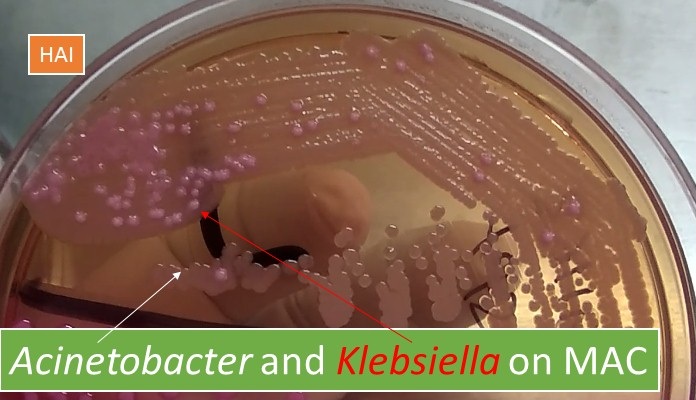
One-third of nosocomial infections are preventable. The CDC report estimates 2 million people in the United States with hospital-acquired infections, resulting in 99,000 deaths. To treat nosocomial infections are difficult due to being generally multi drug resistance (MDR) organisms. Two of the bacteria species most likely to infect patients are methicillin-resistant Staphylococcus aureus(MRSA) and Acinetobacter baumannii. Antibiotic to treat diseases causing MRSA only few effective drugs are available. Acinetobacter bacteria are evolving and becoming immune to existing antibiotics. Therefore, in many cases, polymyxin-type antibacterial is using.. Another growing disease, especially prevalent in New York City hospitals, is the drug-resistant Klebsiella pneumoniae. An estimated more than 20% of the Klebsiella infections in Brooklyn hospitals are now resistant to virtually all modern antibiotics. And these supergerms are now spreading worldwide that can cause severe pneumonia and infections of the urinary tract, bloodstream, and other parts of the body.
Thank you for visiting.