
Introduction
Sphingomonas paucimobilis (formerly classified as Pseudomonas paucimobilis) is a strictly aerobic, non-fermenting, Gram-negative bacillus. It is an environmental oligotroph found widely in soil and water systems. It serves as a stealthy opportunistic pathogen in clinical settings. It is capable of surviving in nutrient-poor conditions and forming robust biofilms inside hospital water networks, medical equipment, and dialysis solutions.
Morphology and Characteristics
Cell Morphology
- Gram Stain: Gram-negative straight or slightly curved rod cells.
- Size: Small, measuring approximately 0.7 × 1.4 μm.
- Motility: Slowly motile via a single polar flagellum (the species name “paucimobilis” denotes its limited motility).
- Spores: Non-spore-forming.
Cultural and Biochemical Profiles
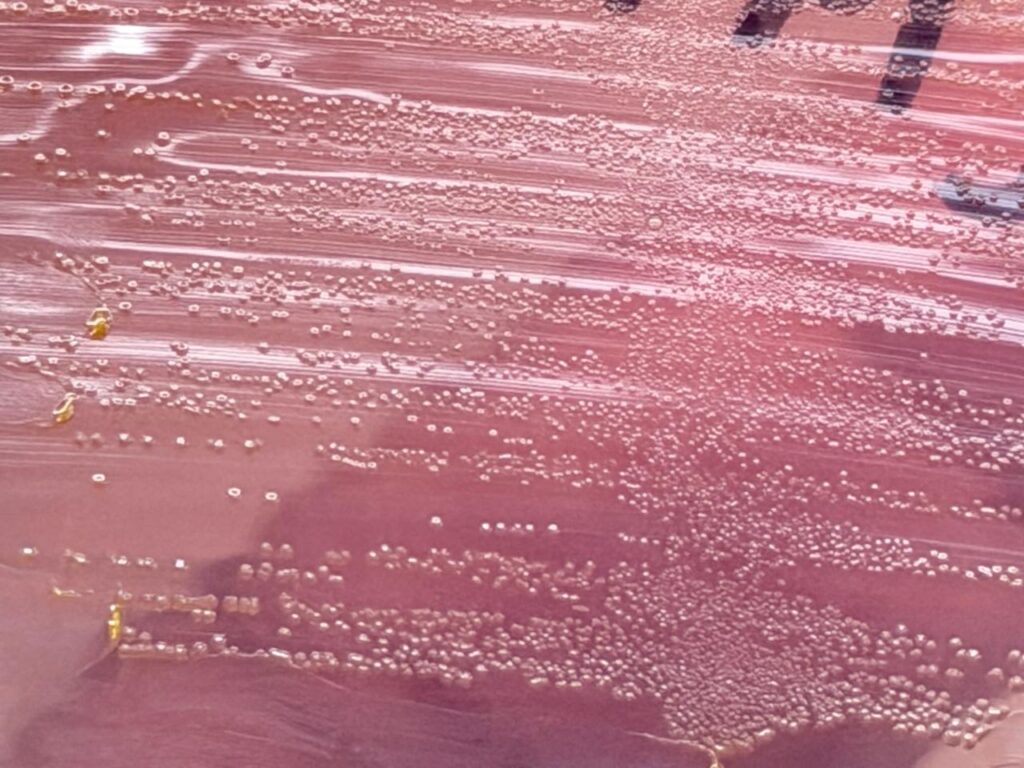
- Colony Appearance: Characterized by yellow-pigmented colonies due to carotenoid pigments when grown on non-selective media like blood or chocolate agar.
- Selective Media: It does not grow on MacConkey agar or standard enterobacterial selective media.
- Biochemical Tests: Oxidase positive and catalase positive.
- Temperature: Grows optimally at 30°C to 37°C but fails to grow at 5°C or 42°C.
Cell Envelope Novelty
- No Lipopolysaccharide (LPS): Unlike typical Gram-negative rods, it lacks endotoxic LPS in its outer membrane.
- Glycosphingolipids (GSL): It replaces LPS with sphingolipids/glycosphingolipids. This reduces its endotoxic potential but alters how it interacts with human immune cells.
Pathogenicity and Clinical Features
- Low Virulence: Due to its lack of traditional endotoxins, it triggers a weaker inflammatory response, resulting in a favorable prognosis and low mortality rates.
- Target Populations: Primarily affects immunocompromised individuals, individuals with chronic diseases (e.g., diabetes, kidney disease), or hospitalized patients with indwelling medical hardware.
- Associated Infections:
- Bacteremia and Septicemia: Frequently traced to contaminated IV fluids, medications, or catheter lines.
- Catheter-Related Infections: Driven by strong biofilm attachment capabilities.
- Other Presentations: Peritonitis (especially in peritoneal dialysis), meningitis, septic arthritis, osteomyelitis, and ventilator-associated pneumonia.
Laboratory Diagnosis
- Specimen Collection: Blood, cerebrospinal fluid (CSF), peritoneal fluid, sputum, or catheter tips depending on symptoms.
- Microscopy: Direct Gram-stain shows Gram-negative rods, but further testing is required since it looks identical to other bacilli.
- Culture: Inoculated onto blood or chocolate agar; checked for smooth, circular, yellow-pigmented colonies after 24–48 hours.
- Biochemical Identification: Identification via API 20NE (Non-Enteric) strips or conventional phenotypic systems tracking its oxidase/catalase positivity.
- Advanced Identification (Gold Standard): Identification is best achieved using MALDI-TOF Mass Spectrometry or 16S rRNA gene sequencing to differentiate it accurately from other non-fermenters.
Treatment
There are no definitive international guidelines for S. paucimobilis; management relies entirely on individualized, in-vitro susceptibility profiling.
Preferred Antibiotic Classes
- Fluoroquinolones: Options like Ciprofloxacin or Levofloxacin show high efficacy.
- Carbapenems & Carbapenem combinations: Meropenem and Imipenem are highly effective for severe infections or septic presentations.
- Beta-lactamase Combinations: Piperacillin-tazobactam functions reliably against many clinical strains.
- Aminoglycosides & TMP-SMX: Often show strong in vitro action.
Resistance Red Flags
- Intrinsic Resistance: Strains produce chromosomally encoded beta-lactamases, rendering them inherently resistant to penicillins and first-generation cephalosporins.
- Multidrug Resistance (MDR): Emerging isolates demonstrate resistance to colistin, aminoglycosides, or third-generation cephalosporins.
Source Control
- If the infection stems from an indwelling device (e.g., CVCs, implants), complete removal of the hardware is critical to bypass the protective bacterial biofilm.
Prevention
- Water System Monitoring: Implement routine chlorination, filtration, and microbiological surveillance of hospital tap water, distilled water lines, and hemodialysis loops.
- Sterile Fluid Protocols: Strict quality control during the preparation and compounding of multi-dose sterile drug solutions (like IV fentanyl or saline flushes).
- Disinfection of Equipment: Rigorous maintenance and sterilization of mechanical ventilators, nebulizers, and endoscopes.
- Catheter Care: Adherence to aseptic techniques during central and peripheral venous line insertion and maintenance.
Keynotes
- Signature Feature: Unique Gram-negative outer envelope lacking Lipopolysaccharide (LPS), replacing it with glycosphingolipids.
- Visual Clue: Produces distinctive yellow-pigmented colonies on standard blood agar, but fails to grow on MacConkey agar.
- Niche: An oligotrophic organism that thrives in low-nutrient, aqueous hospital environments by building resilient biofilms.
- Clinical Outlook: Acts as an opportunistic pathogen with low virulence; while invasive cases do occur, mortality directly attributable to this bacterium remains exceedingly rare.
Further Readings
- https://pmc.ncbi.nlm.nih.gov/articles/PMC5544368/
- https://www.preprints.org/manuscript/202512.0019
- https://pmc.ncbi.nlm.nih.gov/articles/PMC5709302/
- https://pmc.ncbi.nlm.nih.gov/articles/PMC3684358/
- https://www.cabidigitallibrary.org/doi/full/10.5555/20103222076
- https://scispace.com/pdf/sphingomonas-paucimobilis-an-uncommon-cause-of-meningitis-4e5a5zfv7j.pdf
- https://www.midasfieldguide.org/guide/fieldguide/genus/sphingomonas
- https://pmc.ncbi.nlm.nih.gov/articles/PMC8629817/
- https://pmc.ncbi.nlm.nih.gov/articles/PMC4818805/
- https://wwwnc.cdc.gov/eid/article/15/1/pdfs/08-1054.pdf
- https://www.ncbi.nlm.nih.gov/pmc/articles/PMC9236680/
- https://www.droracle.ai/articles/526189/what-is-the-recommended-treatment-for-sphingomonas-paucimobilis-infections
- https://commons.wikimedia.org/wiki/File:Sphingomonas_paucimobilis_on_Columbia_Horse_Blood_Agar_-_Detail.jpg
- https://veteriankey.com/pseudomonas-burkholderia-and-stenotrophomonas-species/