
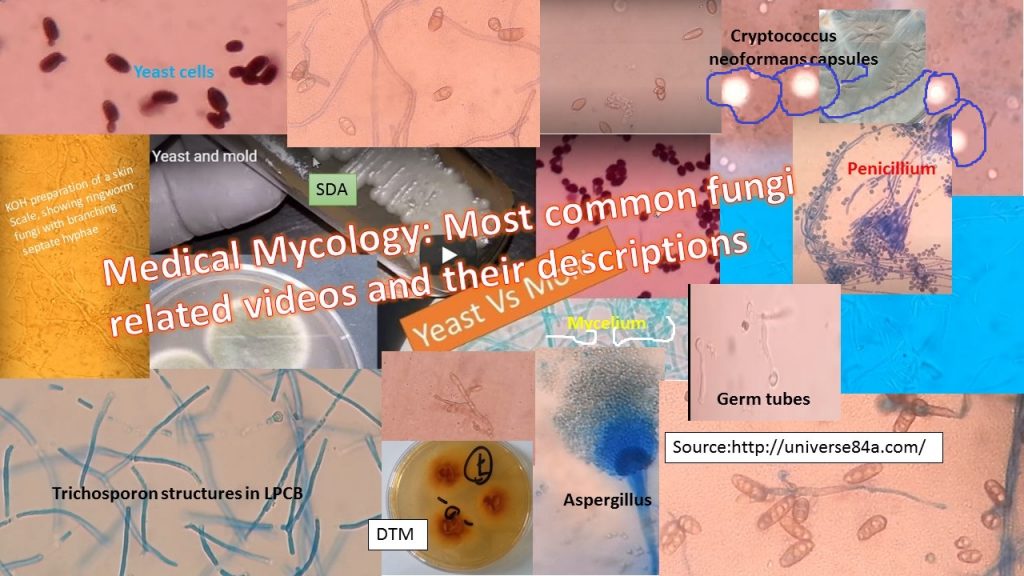
Introduction of Medical Mycology
Medical mycology: The science that deals with the study of fungi that causes the disease is called medical mycology. Initially, fungal infections or diseases were neglected but nowadays they are emerging as a huge problem for proper treatment of patients in health care settings and fungal infections are-
The infection of fungi is called mycoses.
Fungal infections are divided into four groups and they are-
- Superficial mycoses: The filamentous fungi which cause superficial disease in humans may be broadly divided into two groups. Primarily the dermatophytes, natural group-related fungi causing the disease tinea or ringworm in various forms. Secondarily a miscellaneous group of unrelated filamentous fungi may be saprophytes or plant pathogens which produce clinical conditions of skin, hair, nail, eye, or ear, causing Tinea Nigra (Hortaea werneckii) , Piedra (Trichosporon and Piedraia hortae), and Malassezia infections.
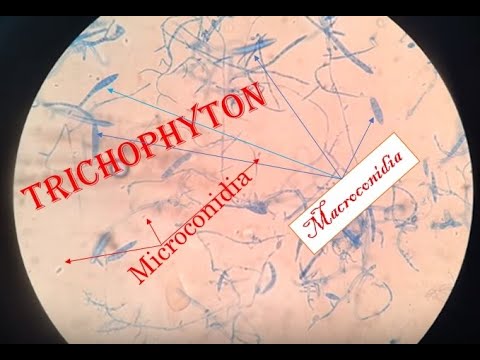
- Cutaneous mycoses: It is caused by dermatophytes a group of three genera Trichophyton, Microsporum, and Epidermophyton.
- Subcutaneous mycoses: It is localized, spreading infections that result from the inoculation into the cutaneous and subcutaneous tissue of wide of saprophytic fungi are Chromobalstomycosis, Mycetoma, Sporotrichosis, Rhinosporidiosis.
- Systemic mycoses: The fungi which cause the deep or systemic mycoses are Histoplasmosis, Blastomycosis, Cryptococcosis, Coccidioidosis, Paracoccidioidosis.
Pathogenic group of fungi
They are of two types:
- True pathogens and
- Opportunistic pathogens
True pathogens are of four genera
- Histoplasma
- Blastomyces dermatitidis
- Coccidioides immitis
- Paracoccidioides brasiliensis
Opportunistic pathogens are-
- Candida
- Aspergillus
- Pneumocystis jirovecii
- Mucor
- Penicillium
Some fungal diseases and their causative agents

Dimorphic fungi
They exist as yeasts in the host tissue and the culture at 37°C and hyphal (mycelium) forms in the soil and in the culture at 22-25°C. Most of them cause systemic infection and they are-
- Sporothrix schenckii
- Blastomycosis
- Histoplasma
- Candida albicans
- Paracoccidiodes
- Penicillium marnefii
- Coccidioides
Importance of Fungal infections or diseases and their laboratory Diagnosis
Fungal infections or diseases are difficult to manage because of the following reasons-
- they tend to be chronic,
- hard to diagnose,
- and difficult to eradicate with anti-fungal drugs.
- In the near horizon, the prevalence of fungal diseases is likely to increase, as there will be more hosts with impaired immunity and drug resistance will inevitably increase after selection by anti-fungal drug use.
- There is a need in progress in the development of new drugs, diagnostics, vaccines, and immunotherapies.
- On the far horizon, humanity may face new fungal diseases in association with climate change.
- Some current associations between chronic diseases and fungal infections could lead to the establishment of fungi as causative agents, which will not greatly enhance their medical importance but also longer hospital stay and economic burden.
Fungal infections Laboratory diagnosis can be carried out under the following points:
- Specimens
Direct Examination of specimens
Macroscopy
Microscopy (KOH preparation, staining techniques, direct immunofluorescence, and histology) - Culture and isolation
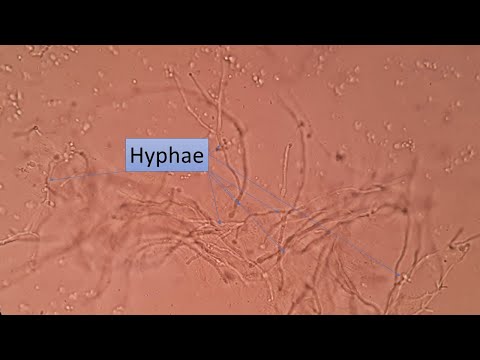
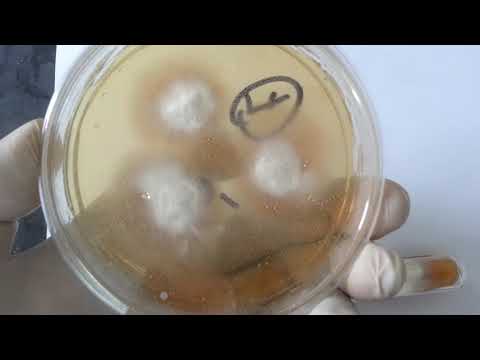
- Identification of culture growth: Colony character, microscopy ( Tease mount, cellophane tape preparation, and slide culture), Nucleic acid probes
- An indirect method based on host immune response: Skin testing, serological tests, and miscellaneous tests for the identification of yeasts and molds.















Bibliography
- Medical Mycology. Editors: Emmons and Binford, 2nd ed 1970, Publisher Lea and Febiger, Philadelphia.
- Video source: https://www.youtube.com/channel/UC_Kvqp1w3_Ey-ifaQBsxfNg
- Rippon’s JW: Medical Microbiology. The pathogenic fungi and the Pathogenic Actinomycetes. 3rd ed 1988 Publisher WB Saunder co, Philadelphia.
- Clinical Microbiology Procedure Handbook Vol. I & II, Chief in editor H.D. Isenberg, Albert Einstein College of Medicine, New York, Publisher ASM (American Society for Microbiology), Washington DC.
- A Textbook of Medical Mycology. Editor: Jagdish Chander. Publication Mehata, India.
- Practical Laboratory Mycology. Editors: Koneman E.W. and G.D. Roberts, 3rd ed 1985, Publisher Williams and Wilkins, Baltimore.
- Topley & Wilsons Medical Mycology. Editors: M.T. Parker & L.H. Collier, 8th ed 1990, Publisher Edward Arnold publication, London.
- Textbook of Diagnostic Microbiology. Editors: Connie R. Mahon, Donald G. Lehman & George Manuselis, 3rd edition2007, Publisher Elsevier.
- Mackie and Mc Cartney Practical Medical Microbiology. Editors: J.G. Colle, A.G. Fraser, B.P. Marmion, A. Simmous, 4th ed, Publisher Churchill Living Stone, New York, Melborne, Sans Francisco 1996.
- Bailey & Scott’s Diagnostic Microbiology. Editors: Bettey A. Forbes, Daniel F. Sahm & Alice S. Weissfeld, 12th ed 2007, Publisher Elsevier.