
Blog
TSI Test: Introduction, Principle, Procedure, Result-Interpretation and Limitation
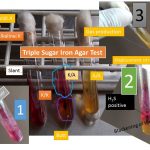 Introduction of TSI Test This single TSI test is useful for the following features- To know the carbohydrate utilization ability of the organisms Gas formation by the organisms Hydrogen sulfide production by the bacteria TSI stands for triple sugar iron and it is an agar medium recommended for use in the differentiation of Enterobacteriaceae by their ability to ferment glucose, lactose, and sucrose, and their ability to produce hydrogen sulfide. Principle of TSI Test Triple sugar...
Lactophenol cotton blue (LPCB) wet mount is not only used in mycology but also in parasitology laboratory to identify filamentous fungi and parasitic structures respectively
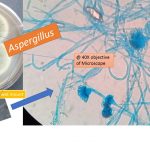 Lactophenol Cotton Blue (LPCB) wet mount Introduction LPCB is a combination of fixative, staining, and clearing agent. Its contents functions are as follows- Lactic acid: It helps in preserving the morphology of the fungal elements. Phenol: It acts as a disinfectant Cotton blue: It stains the fungal elements as well as intestinal parasitic (cyst, ova, and oocyst) and nonparasitic structures(vegetable cells, mucus, muscle fibers, and other artifacts) and Glycerol: It is a hygroscopic agent that prevents...
Anaerobic Infection: Importance, Indications, List of Anaerobic Bacteria
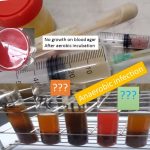 Anaerobic infection As you know, isolating the causative agent of anaerobic infection is really cumbersome. It means that leave the practice which is not a solution. This is not my personal opinion but according to researchers' data; "many reports associate 50-60% of important infections with anaerobic bacteria." This is the reason, we concern with anaerobic infections. The possibility of anaerobic infection indicated by the following clues and they are- The foul odor of the specimen site...